













LSR Metering and Mixing Systems: A/B Ratio Accuracy and Routine Maintenance


Overview: The 1:1 ratio accuracy between the A and B components is where LSR molding quality begins. A deviation beyond 3 percent brings incomplete cure, hardness drift and loss of mechanical properties. The metering system is made up of the material drums, the pumps, the static mixer and the non-return valve; a fault anywhere in that chain shows up on the part.
How the System Is Built
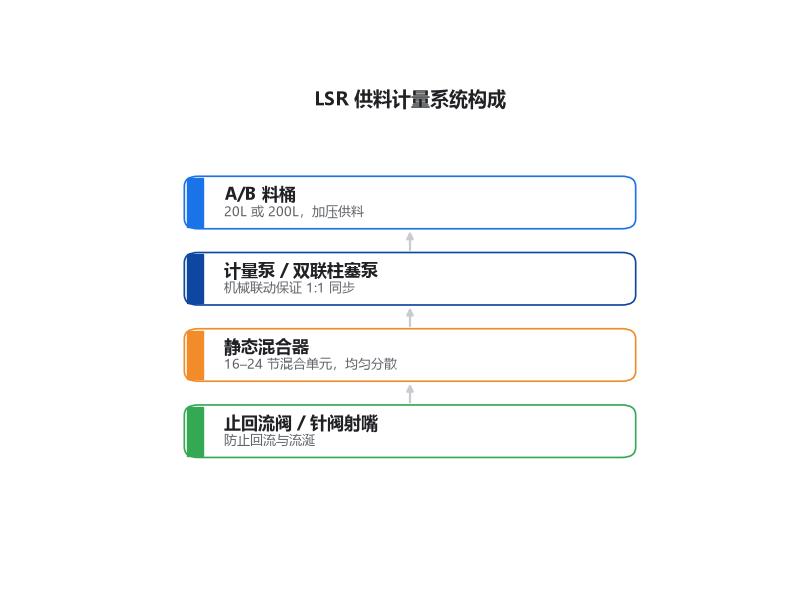
A typical LSR feed system includes two material drums, A and B, usually 20 or 200 litres; a pressure pump, piston or pneumatic; metering cylinders; a static mixer; a check valve or a needle shut-off nozzle; and a colour masterbatch dosing unit. Inside the static mixer the A and B components are repeatedly split and recombined, and 16 to 24 mixing elements are usually enough to achieve uniform dispersion.
The critical point is metering cylinder synchronization: the two cylinders must be mechanically linked or driven by the same servo, so the volumetric flow of A and B is strictly equal at every moment. A duplex piston pump is the most common way to achieve this, and reaches ratio accuracy of plus or minus 0.5 to 1 percent.
What Ratio Deviation Costs
The effect of ratio imbalance is non-linear. At 1 to 2 percent deviation, part hardness moves by roughly 1 to 2 Shore A — invisible to the eye, but the SPC data will drift. At 3 to 5 percent, hardness is off by 3 to 5 points, the surface turns tacky and compression set deteriorates. Beyond 5 percent, curing is visibly poor: the part comes out soft and strength drops sharply.
The more insidious problem is intermittent deviation, where a cycle occasionally comes up short and an individual part leaves under-cured, mixed in with good parts. Cosmetic inspection will not catch it; only in-line metering monitoring or periodic hardness sampling will.
Routine Maintenance
Daily: check drum pressure, listen for abnormal noise or leaks at the pump, and check the pressure differential across the static mixer — a sudden rise means the mixer is blocking. Weekly: clean the check valve, inspect the metering cylinder seals for wear, and verify colour masterbatch dosage. Monthly: strip and inspect the static mixer, clean or replace it, and check the lines for cured skin.
If the machine stops for longer than the pot life — usually 24 to 48 hours depending on grade — the system has to be cleaned out thoroughly: circulate base compound or a dedicated flushing oil through the feed pipe and mixer, so material does not cure in the line and ruin the whole pipe run.

Troubleshooting
Part soft with a tacky surface: check the ratio first, verifying by weighing — take ten shots of A and ten of B separately and compare the weights — then check whether the static mixer has failed, then whether material temperature is high enough to have triggered premature reaction. Hardness running high and the part turning brittle: usually too little of the A component, the one carrying the platinum, or too much of B, the one carrying the hydrogen silicone oil.
Undispersed colour streaks in the part: too few mixer elements, or the mixer has blocked — replace it. Periodic short shots: check the seating face of the check valve and whether the pump's non-return valve is worn. Zhongshan Henry Precision Technology Co., Ltd. (Henry Precision) runs first-part hardness checks every shift and a weekly ratio verification by weighing on its feed systems, catching ratio faults before they become batch defects.
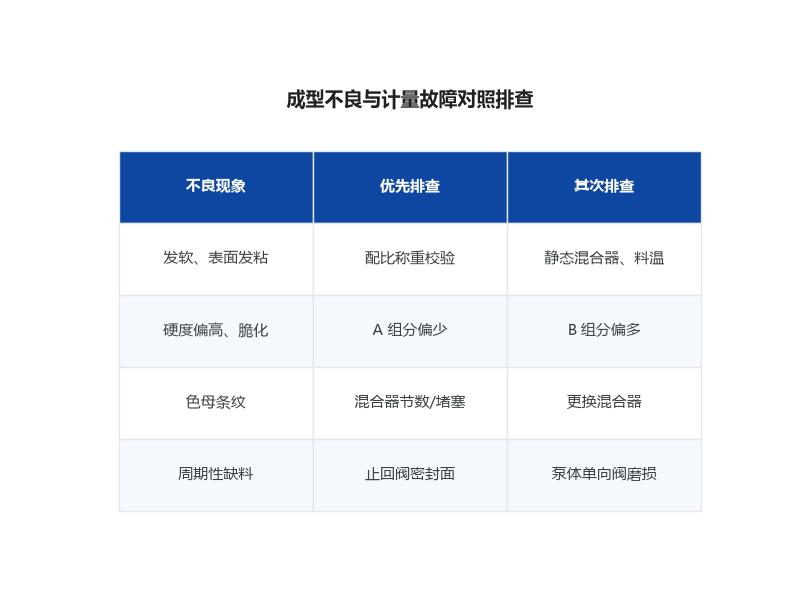
Table of Contents
Related News



Get Your Custom Liquid Silicone Overmolding Solution in 3 Steps
Learn More

