













Designing an Automated LSR Overmolding Line: Flexible Tool Change in Practice


1. Planning the Line
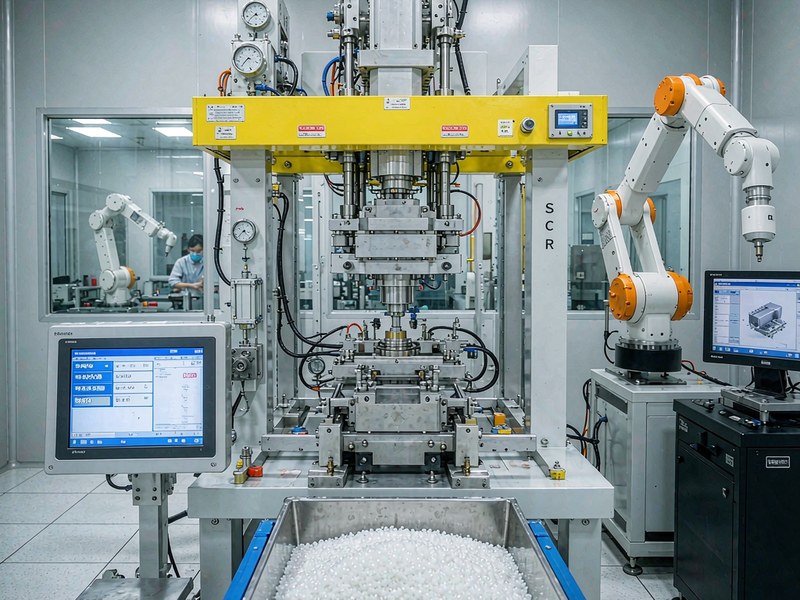
An automated LSR overmolding line is usually built from five functional units: the A/B two-component feeding and static mixing metering unit, the precision injection unit, the insert loading and part removal robot, the post-processing unit (deflashing, cleaning, inspection), and an MES data acquisition system running across all of them. Planning should centre on cycle time balance, so that hidden bottlenecks do not appear — such as the molding machine waiting on loading and unloading. What sets a liquid silicone precision overmolding line apart is the feeding system: the metering pump has to hold mix ratio accuracy within plus or minus 0.5 percent, and the static mixer needs thermal isolation from the cold runner, so the compound does not pre-cure in the transfer section. The layout should also leave room to upgrade the cleanliness class later, so medical or food-grade production can be brought in without rebuilding.
2. Designing the Core Units
How each unit is designed feeds straight through to yield and uptime. Insert loading is where overmolding automation really differentiates itself: for precision metal inserts, the recommended approach is a vibratory bowl with vision location and robot pick-and-place, holding positioning accuracy within plus or minus 0.02 mm, so an insert cannot shift in the tool and leave uneven silicone thickness. On the injection unit, an all-electric micro-shot machine is advisable, with 0.1 g metering accuracy to suit small overmolded parts. The end-of-arm tooling on the take-out robot needs an anti-stick design, to deal with the adhesion between an LSR part and the cavity. Post-processing and in-line inspection should be arranged on an inspect-while-molding principle, with CCD cosmetic checks and check weighing built into the cycle, catching bubbles, short shots and flash at the first opportunity — the precondition for high-yield production in liquid silicone overmolding.
3. Flexible Tool Change
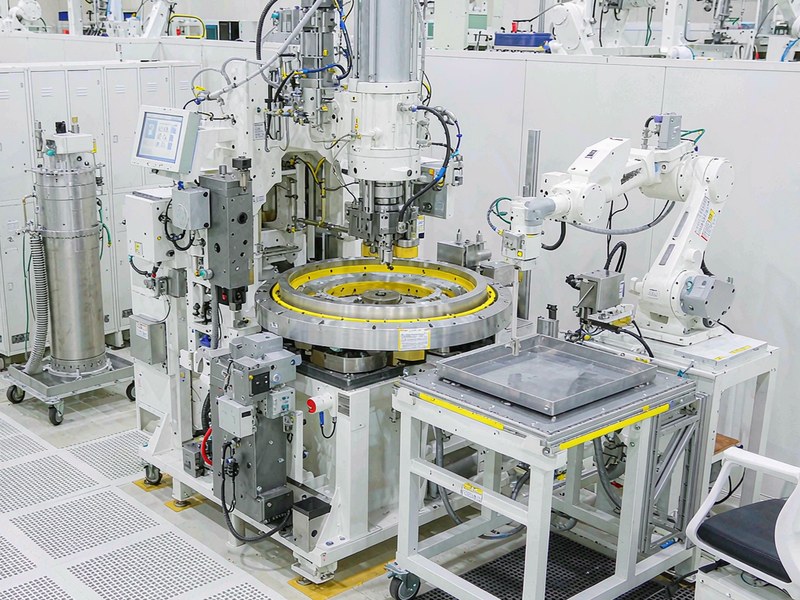
To handle frequent product switches, flexible tool change can be built up in four levels. The first is a quick mold change system: a standard mold base interface with magnetic or hydraulic clamping, compressing changeover from hours to under 15 minutes. The second is common utilities: mold temperature controllers, cold runner temperature control and ejection hydraulics all use uniform quick-connect couplings, so no pipe has to be disconnected and reconnected one by one. The third is a parameter recipe library: shot volume, mold temperature, cure time and the other parameters for each tool are fixed in the MES and called up automatically once the tool is loaded, removing the risk of manual setting errors. The fourth is automatic tool changing (ATC): a mold storage rack with AGV handling, giving unmanned tool change and preheating management. An LSR precision overmolding operation can pick the level that fits its order mix; for high-frequency small-batch changeovers, the first three levels are the practical minimum.
4. Making Traceability Work
Stable running on a flexible line depends on a closed data loop. Every shot should carry a unique traceability chain linking tool number, material lot and injection parameters, so that when something goes wrong the exact point of parameter drift can be found within minutes. An SPC system monitors key process parameters in real time and raises alerts, catching hidden degradation such as metering pump drift or mold temperature decay before it reaches the parts. An OEE board makes changeover loss, material wait loss and yield loss visible, which is what continuous improvement has to stand on. Zhongshan Henry Precision Technology Co., Ltd. (Henry Precision) has built several automated liquid silicone overmolding lines: quick mold change systems and a parameter recipe library allow fast switching between products, and the full-process MES traceability system supports the flexible order demands of medical, consumer electronics and automotive customers. Deep integration of automation and flexibility is becoming the core manufacturing foundation for LSR overmolding plants in a high-mix era.
Table of Contents
Related News
-
Cleanroom Processing for LSR Precision Overmolding: Environmental Control and Contamination Prevention
Technical ArticlesLearn More
-

Defects in LSR Precision Overmolding: Bubbles, Flash, Sink Marks and Short Shots
Technical ArticlesLearn More
-
Dimensional Tolerance in LSR Precision Overmolding: How Micron-Level Accuracy Is Achieved
Technical ArticlesLearn More

Get Your Custom Liquid Silicone Overmolding Solution in 3 Steps
Learn More

