













Cleanroom Processing for LSR Precision Overmolding: Environmental Control and Contamination Prevention


1. Why a Cleanroom
Liquid silicone (LSR) precision overmolded parts are used widely in medical, food-contact and high-end consumer electronics, applications that place strict demands on cleanliness, biocompatibility and chemical purity. In an ordinary production environment, airborne particles, micro-organisms, oils and volatile organic compounds (VOC) settle onto the silicone surface or get mixed into the compound, producing black spots, inclusions, odour or biological contamination — and with them the risk of product recall and regulatory non-compliance. Cleanroom processing is therefore not only a requirement for medical-grade and food-grade LSR products, but a core part of what separates a high-end precision overmolding supplier.
2. Cleanroom Classification
Cleanroom classes are defined under ISO 14644-1, by the number of particles of a given size per cubic metre of air. Medical-grade LSR parts are normally produced in ISO Class 7 or ISO Class 8, and some implantable products require ISO Class 5. In concrete terms, ISO Class 7 allows no more than 352,000 particles of 0.5 micrometres or larger per cubic metre. Beyond particle count, a cleanroom also has to control temperature, 20 to 25 degrees Celsius, relative humidity, 45 to 65 percent, and positive pressure differential, at least 5 pascals, to keep outside contamination from getting in. Stable temperature and humidity affect LSR directly: excessive humidity leads to moisture pickup and bubbles, while temperature swings disturb consistency of the cure rate.
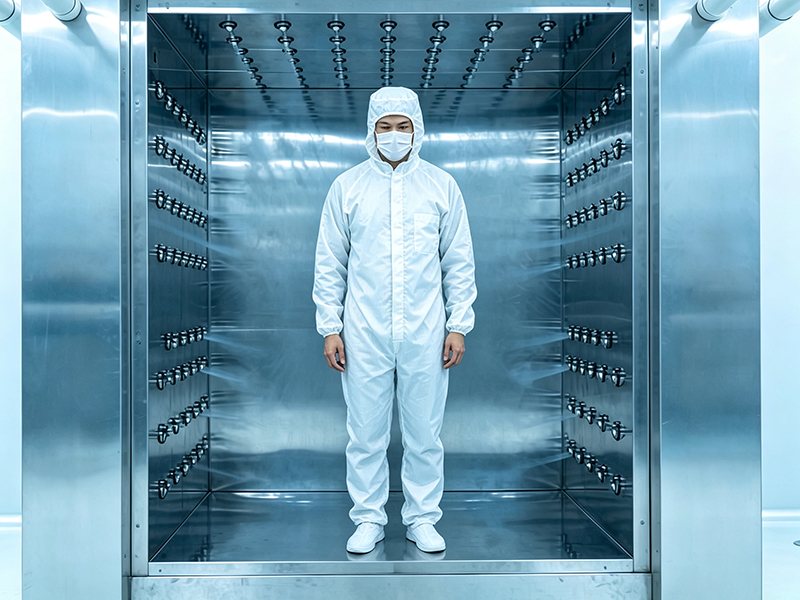
Figure 1 Cleanroom air shower entrance and gowning procedure
3. Personnel and Material Control
The biggest contamination source in a cleanroom is not the equipment, it is the people in it. Skin flakes, hair, fibres and carried micro-organisms make up most of the particle load. Anyone entering has to follow a strict gowning procedure: cleanroom suit, hood, mask, gloves and shoe covers, then through an air shower to remove particles clinging to the surface. Material control is equally tight. LSR A and B components go through a pass-through hatch after unpacking, so packaging fibres and dust stay outside. Metal inserts and plastic substrates are ultrasonically cleaned and dried under clean conditions before they reach the press. Tool maintenance and cleaning happen outside the cleanroom, and the tool only goes back in once it has passed inspection.
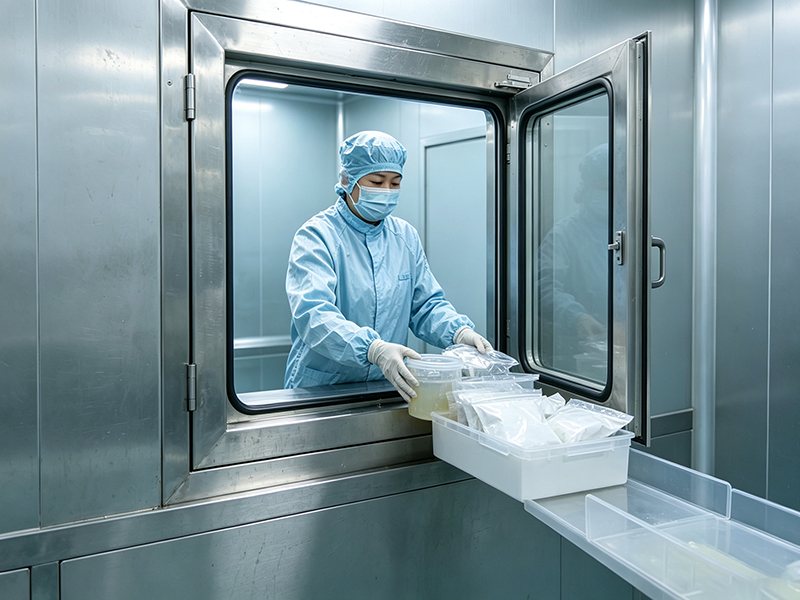
Figure 2 LSR material passing through a hatch into the cleanroom
4. Contamination Control in Process
In LSR injection molding, contamination control runs through the whole sequence, from mixing and injection to demolding and packing. Mixing happens inside a closed metering system, so the A and B components are never exposed to air that could add moisture or particles. Injection uses a fully enclosed cold runner, avoiding the contamination risk of an open gate. Parts go straight into clean trays or anti-static bags after demolding, so they are not left sitting in the open. Packing is done under a laminar flow hood inside the cleanroom, so the product leaves in an uncontaminated state. Regular environmental monitoring, particle counting, settle plate testing and surface wipe tests, together with equipment maintenance such as filter changes and HVAC calibration, is what keeps the cleanroom running reliably over the long term.

Figure 3 Technician inspecting a medical silicone part inside a cleanroom
5. Henry Precision
Zhongshan Henry Precision Technology Co., Ltd. runs a compliant cleanroom production system covering the full manufacturing process for medical-grade, food-grade and high-end consumer electronics LSR precision overmolded parts. From gowning and material transfer to process control and environmental monitoring, Henry Precision applies systematic cleanroom management standards, holding parts to the highest industry levels for particulate, microbial and chemical contamination — treating precision as its foundation, and delivering overmolded sealing products that are safe, pure and reliable.
Table of Contents
Related News

Get Your Custom Liquid Silicone Overmolding Solution in 3 Steps
Learn More

