













How to Control Flash and Burrs on Medical LSR Overmolded Parts


Why Flash Matters
Flash and burrs on medical LSR overmolded parts are not just a cosmetic reject. Tiny silicone fragments also create safety hazards in use, and medical products are held to far tighter control of the sealing area than ordinary consumer electronics overmolding.
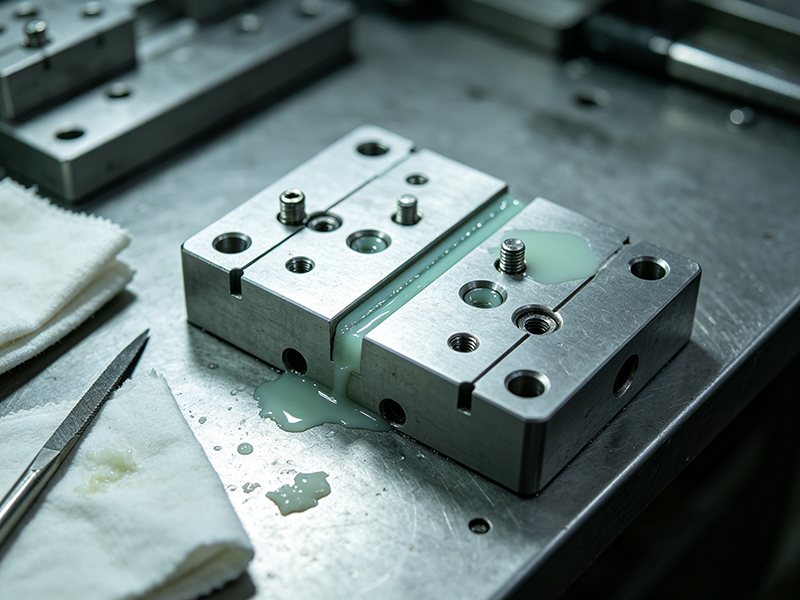
Tooling Optimization
The fit accuracy of the tooling sealing faces is the first condition for controlling flash. LSR flows extremely easily, so any excess clearance at the seal lets material escape. Critical sealing areas in medical overmolding need precision-machined inserts, with the tool fit clearance held under tight control.
Process Adjustment
Excessive injection pressure or injection speed makes overflow — and therefore flash — worse. With complete cavity fill assured, tune injection and holding pressure to balance fill quality against the risk of overflow.

Post-Process Control
Even with tooling and process optimised, a small amount of flash cannot be entirely avoided. Rough manual trimming is not acceptable on medical products — cryogenic deflashing comes first, so that pulling on the flash cannot create micro cracks that damage the overmolded interface.
Table of Contents

Get Your Custom Liquid Silicone Overmolding Solution in 3 Steps
Learn More

