













What Governs Bond Strength in LSR Overmolding, and How to Control It


Substrate and Surface Energy
Bonding is interfacial molecular attraction and mechanical interlocking working together, and substrate selection is the first gate. Among common rigid substrates, PC, PA66, PBT and PPSU are reasonably compatible with LSR, while untreated polyolefins such as PP and PE sit below 31 mN/m in surface energy and are hard to bond. Engineering practice calls for substrate surface energy of 38 mN/m or above; anything lower has to be flame treated, plasma treated or corona treated. Moderate surface roughening, Ra 0.8 to 1.6 micrometres, builds mechanical interlock and can raise peel strength by 20 to 40 percent. One thing deserves particular attention: release agent residue, oil and blooming are invisible killers of adhesion — never use a silicone-oil-based release agent on the rigid part.
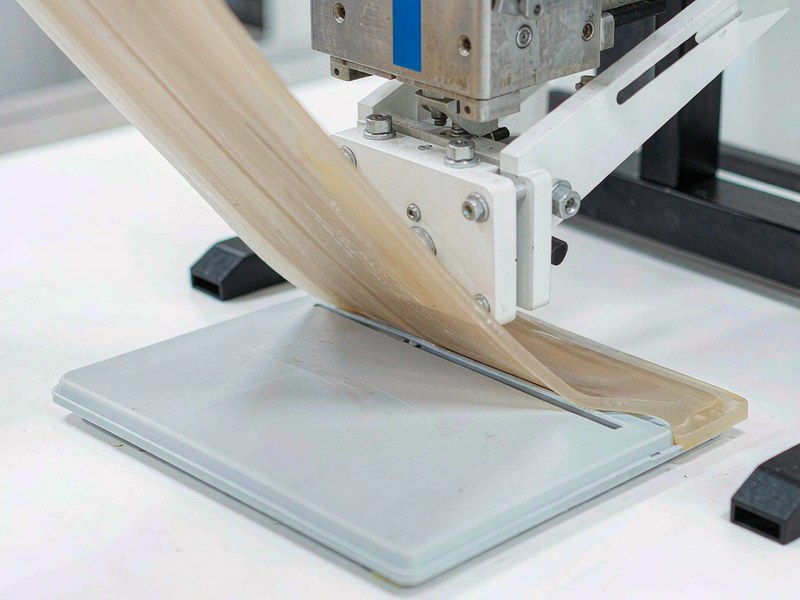
Primer Process Control
Primer is standard on the great majority of liquid silicone overmolding projects. Its job is to build a chemical bridge between the silicone and the substrate, and three points govern how well it works. Coating thickness is held at 5 to 10 micrometres: too thin and the bridge is incomplete, too thick and cohesive strength drops. Drying time after coating is typically 10 to 30 minutes, long enough for the solvent to flash off — otherwise residual solvent bubbles during high-temperature cure. Primed parts should be overmolded within 4 hours; past that they need re-treating. Plasma activation and primer-free self-adhesive LSR have become more common in recent years, simplifying the process and removing batch-to-batch primer variation, but self-adhesive grades are selective about the substrate, so compatibility has to be verified before switching materials.
Molding and Cure Parameters
In liquid silicone overmolding, the temperature window decides how completely the interfacial reaction runs. Mold temperature is recommended at 170 to 200 degrees Celsius, and rigid substrates can be preheated to 100 to 120 degrees to raise interfacial reactivity. Injection pressure is low, generally 5 to 20 megapascals, but the higher the contact pressure between melt and substrate, the more completely the interface wets out. Cure time is calculated from the thickest wall section, using a rule of thumb of 35 to 60 seconds per millimetre, adjusted for Shore hardness and catalyst activity; under-curing on its own can drop interfacial strength by more than 50 percent. Parameter settings should be locked down through DOE trials, with SPC monitoring drift in cure temperature and time.
Testing and Failure Assessment
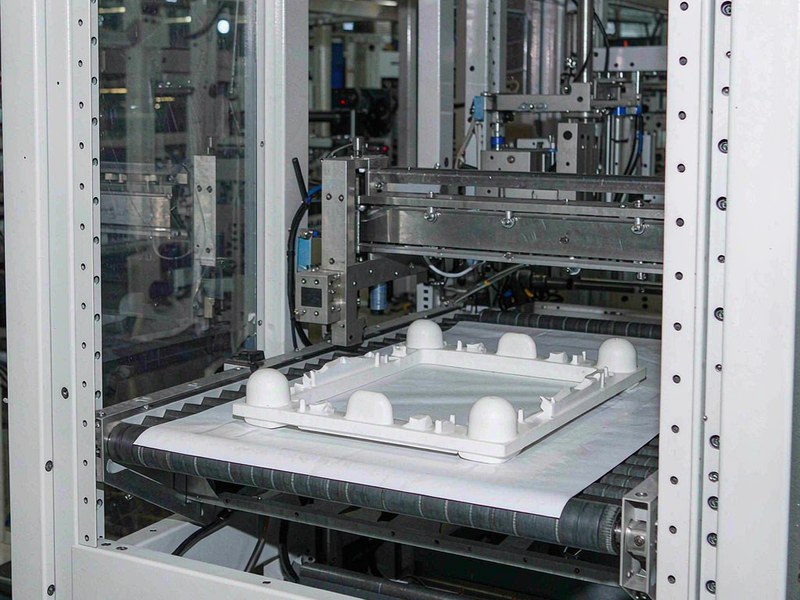
Bond quality has to be backed by numbers. Standard acceptance uses a 90-degree peel test, with functional seals required to reach a peel strength of at least 3.0 newtons per millimetre. How the sample fails matters more than the figure: interfacial failure, bare substrate showing, means the bond has failed; cohesive failure, the silicone layer tearing, is the desired outcome. In production it is worth sampling every shift, backed by thermal shock testing, minus 40 to 125 degrees Celsius for 100 cycles, to verify bond durability. Zhongshan Henry Precision Technology Co., Ltd. has built a complete technical chain running from material validation and process DOE through to bond testing, and the engineering team at Henry Precision can tailor an LSR precision overmolding bonding solution to any substrate combination, helping customers lock in a reliable process window at the front end of a project.
Table of Contents
Related News
-
Cleanroom Processing for LSR Precision Overmolding: Environmental Control and Contamination Prevention
Technical ArticlesLearn More
-
Defects in LSR Precision Overmolding: Bubbles, Flash, Sink Marks and Short Shots
Technical ArticlesLearn More
-
Designing an Automated LSR Overmolding Line: Flexible Tool Change in Practice
Technical ArticlesLearn More

Get Your Custom Liquid Silicone Overmolding Solution in 3 Steps
Learn More

