













Does LSR Overmolding Yellow? The Real Limits of Yellowing and Aging Resistance


Overview: platinum-cured LSR resists yellowing better than peroxide-cured silicone, but it is not immune. Ultraviolet light, heat, ozone, sulphur-containing environments and certain chemicals all trigger yellowing, and it shows most clearly on light-coloured and transparent parts. Through grade selection, anti-yellowing additives and light-shielding structural design, yellowing in outdoor use can be kept within acceptable limits.
Why It Yellows
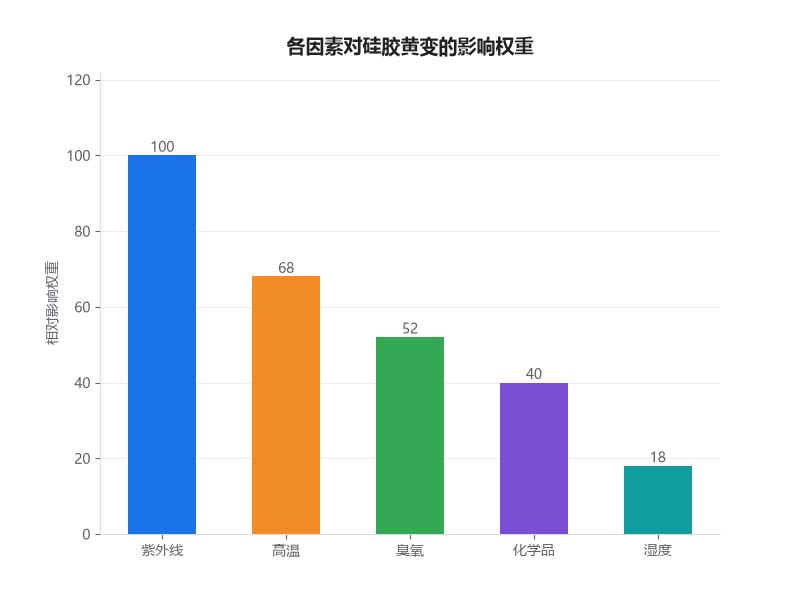
The essence of silicone yellowing is oxidative degradation of the molecular chain under light, heat, oxygen and ozone, producing carbonyl-containing chromophores. Because the platinum cure system uses no peroxide, residual catalyst metal ion content is extremely low and the tendency to yellow is markedly lower than with conventional cure systems — which is why high-end products generally use platinum.
But platinum systems are not immune: UV (particularly the 280-400 nm band) carries enough energy to break Si-CH3 bonds, heat accelerates the oxidative chain reaction, and ozone attacks modified silicones containing double bonds aggressively.
How Long It Actually Lasts
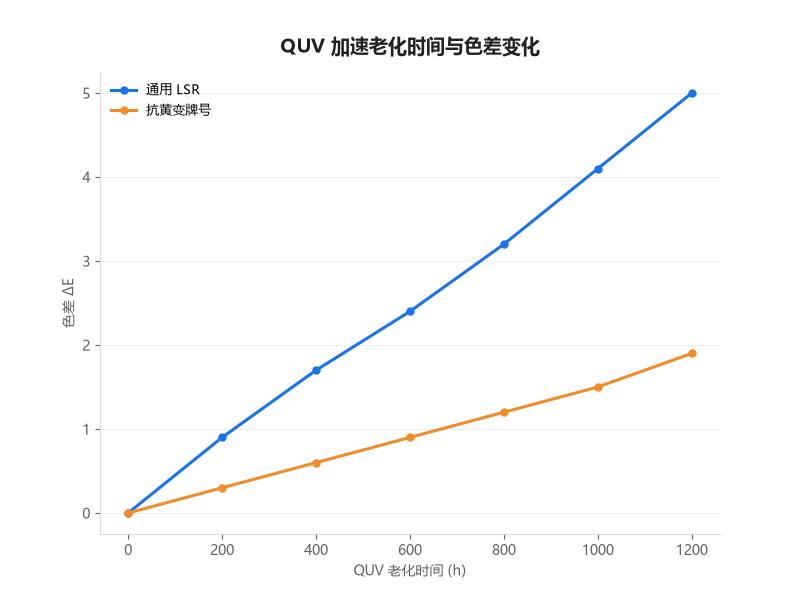
Under QUV accelerated aging (UVA-340, 0.76 W/m², 8 hours UV at 60°C plus 4 hours condensation at 50°C), general-purpose LSR starts to show visible yellowing (ΔE > 2) after roughly 300-500 hours, while anti-yellowing grades reach 1,000-1,500 hours. Translated to outdoor use, that corresponds roughly to 1-3 years in southern China.
Indoor and outdoor need to be separated: in a light-shielded indoor environment, standard LSR stays essentially unchanged for 5-8 years; for outdoor exposure, an anti-yellowing grade plus structural shading is mandatory.
Four Countermeasures
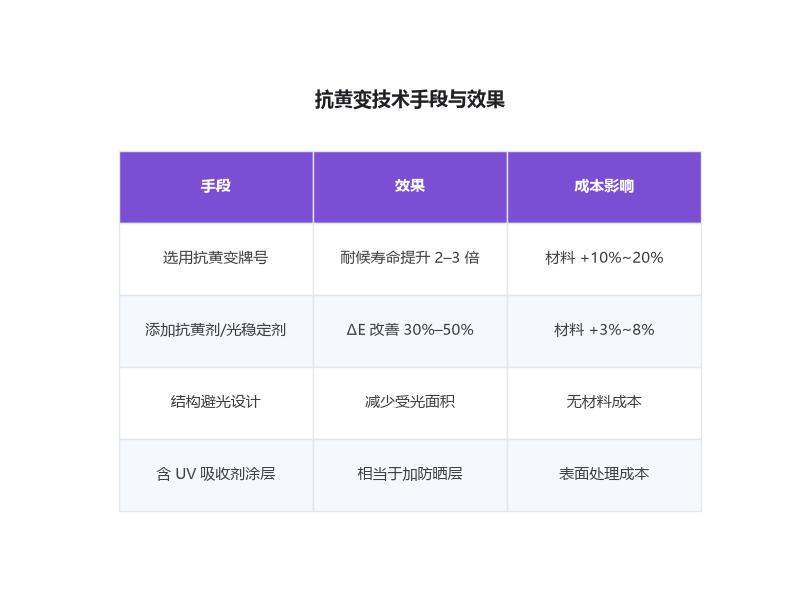
First, choose an anti-yellowing grade — these materials usually contain hindered amine light stabilizers or specialized antioxidants. Second, add an anti-yellowing agent or light stabilizer masterbatch, typically at 0.3%-1%. Third, in structural design, place the silicone part in a groove or on an inner face, or reduce the exposed area. Fourth, when applying a soft-touch coating, choose one containing UV absorbers, which is effectively a sunscreen layer for the silicone.
The service environment matters too: sulphur-containing environments (rubber curing shops, hot spring areas), chlorine disinfectants and certain cleaning agents all cause discolouration or surface tack, so compatibility should be verified for these applications.
How to Accept It
We recommend quantifying with a colourimeter: measure L*a*b* at the same location before and after testing and calculate ΔE. The usual convention is ΔE ≤ 2 for no visible change, ΔE ≤ 3 acceptable, and above 3 considered obvious yellowing. Record the change in yellowness index (YI) at the same time.
Accelerated aging conditions should be written into the technical agreement (light source type, irradiance, cycle conditions, judging duration), otherwise supplier and customer data taken under different conditions will not match. Zhongshan Henry Precision Technology Co., Ltd. (Henry Precision) can issue aging test reports to the customer's specified automotive, outdoor or appliance standards.
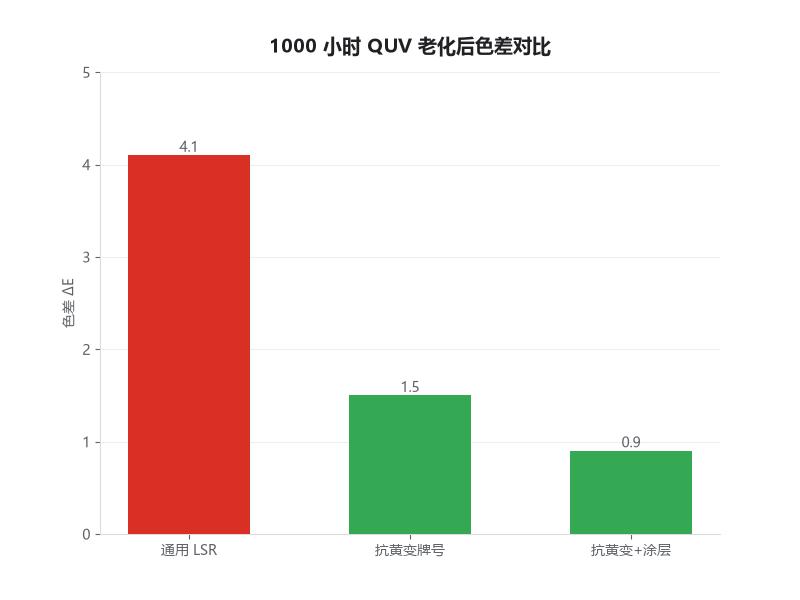
Table of Contents
Related News

Get Your Custom Liquid Silicone Overmolding Solution in 3 Steps
Learn More

