













What Temperature Range Do LSR Overmolded Parts Cover? Are They Suitable for High Heat?


LSR overmolded parts generally operate from -50°C to 200°C over the long term, with short-term peaks of 220-250°C. Whether a part suits a specific high-temperature environment also depends on the grade selected, the degree of cure, and the temperature ceiling of the substrate itself.
Temperature Range
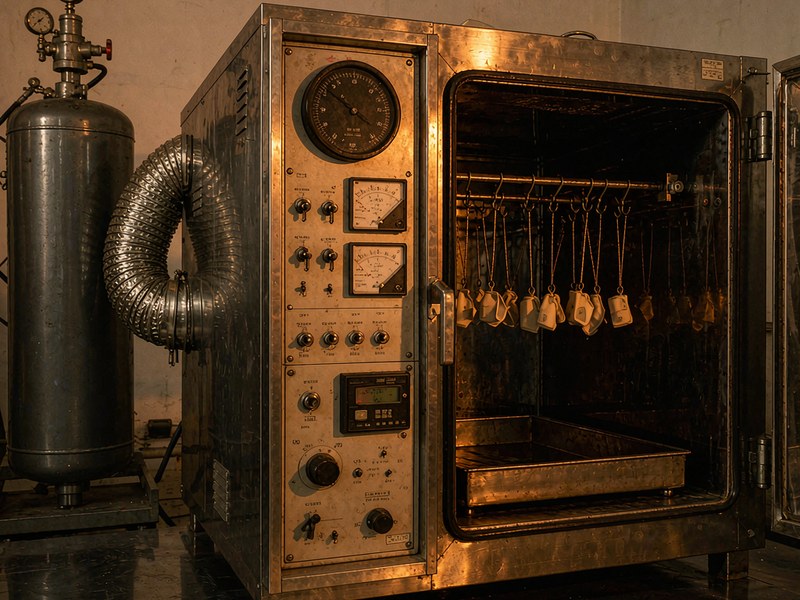
Liquid silicone rubber (LSR) is an addition-cure silicone elastomer whose molecular backbone is built on Si-O bonds, giving excellent thermal stability. Standard general-purpose grades run about -50°C to 200°C long term; high-temperature grades combined with post-curing can work continuously at 200°C for several hours without significant aging. One thing to note: the temperature ceiling of an overmolded part is usually set by the substrate. PC, for example, is limited to roughly 120-130°C and PA66 to about 180-200°C. If the substrate fails first, a more heat-resistant silicone layer will not save the part.
High-Temperature Applications
LSR overmolded parts are widely used in automotive engine-bay sealing, steam valve bodies in kitchen appliances, water heater pump seals, LED luminaire thermal structures, and high-temperature sterilization of medical devices. For prolonged contact with steam or hot water, use food-contact or medical grades with a higher degree of cure to reduce volatile low-molecular-weight content. If the part must survive reflow soldering (peak 245–260°C), confirm with our engineering team in advance: standard LSR may not be adequate, and a high-temperature grade with thermal aging validation is required.
Selection Guidance
At the selection stage, tell us the actual operating temperature, whether it is continuous, and whether the part contacts chemicals. We recommend testing both low temperature (-40°C) and heat aging; heat aging is typically benchmarked at 85°C for 1,000 hours, extended to 200°C for 500 hours in special applications. The engineering team at Zhongshan Henry Precision Technology Co., Ltd. (Henry Precision) combines supplier data with our own test results to recommend a suitable temperature solution and provides samples for limit-temperature validation.
Test Confirmation
Temperature performance has to be confirmed by testing in the end. Standard verification includes hot air aging, low-temperature brittleness and compression set, with reports issued before volume production. As a specialist in precision LSR overmolding, Henry Precision supports test programmes built to customer standards, ensuring dimensional and sealing stability in high-temperature service batch after batch.
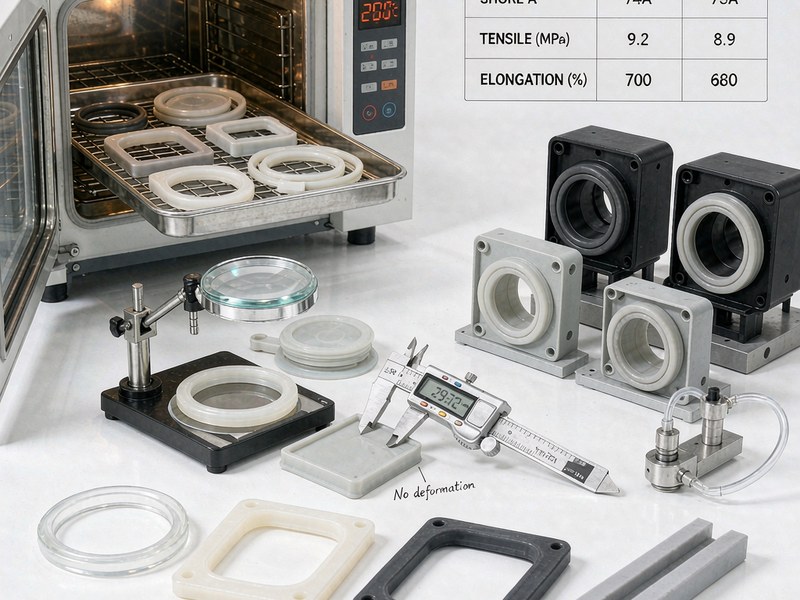
Table of Contents


Get Your Custom Liquid Silicone Overmolding Solution in 3 Steps
Learn More

