













How Long Does an LSR Overmolding Tool Last? Shot Life Explained


Overview: a properly maintained liquid silicone overmolding tool typically lasts between 300,000 and 1 million shots, equivalent to roughly 2-5 years of production. The four variables that decide it are tool steel, the abrasiveness of the material, maintenance frequency and operating discipline. Grades with heavy filler loading and higher hardness wear the tool faster, and surface coatings extend life significantly.
Typical Life Bands
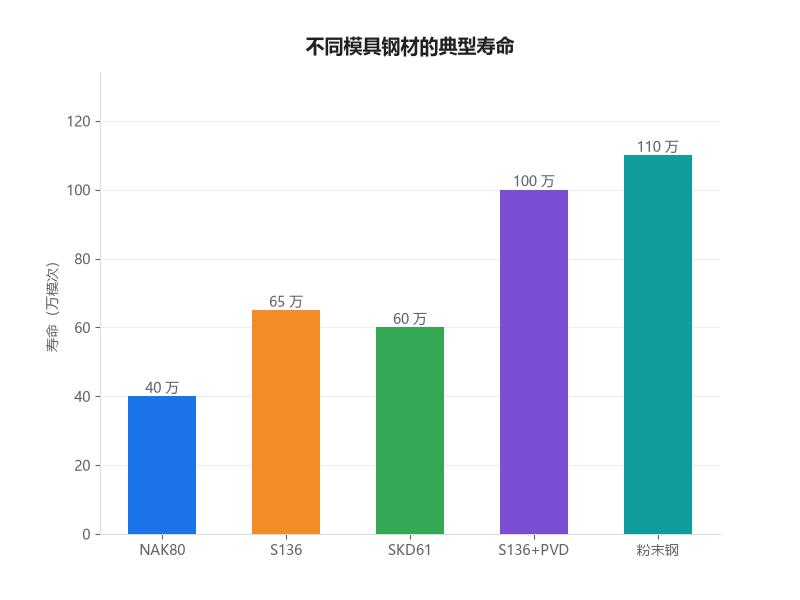
Going by industry production experience, the life of an LSR overmolding tool falls roughly into three bands: pre-hardened steel (NAK80, 718H) running soft material and small parts, about 300,000-500,000 shots; quenched and tempered steel (S136, SKD61, HRC 48-52) for general parts, about 500,000-800,000 shots; high-hardness powder steel or tools with a PVD/DLC coating, reaching 800,000-1.2 million shots.
One clarification: the shot count here is cumulative injections. If the part runs in a multi-cavity tool (say 8-up), 500,000 shots corresponds to 4 million parts, and the actual service life in years is considerably longer.
What Wears the Tool
LSR is a thermoset, so unlike thermoplastics it does not need high-pressure, high-speed filling and it places little mechanical shock on the tool. Its abrasiveness comes from fillers: hard micro-particles such as fumed silica, aluminium hydroxide flame retardant and colour masterbatch act like a lapping compound over long production runs, wearing the gate, runner and parting line. Grades with high hardness and heavy filler loading wear faster.
Corrosion is the second factor. Some LSR grades generate trace acidic substances during curing; if the tool is not protected against rust, or is not sealed properly when production stops, pitting appears on the cavity surface and transfers straight onto the parts when production resumes.
Four Actions That Extend Life
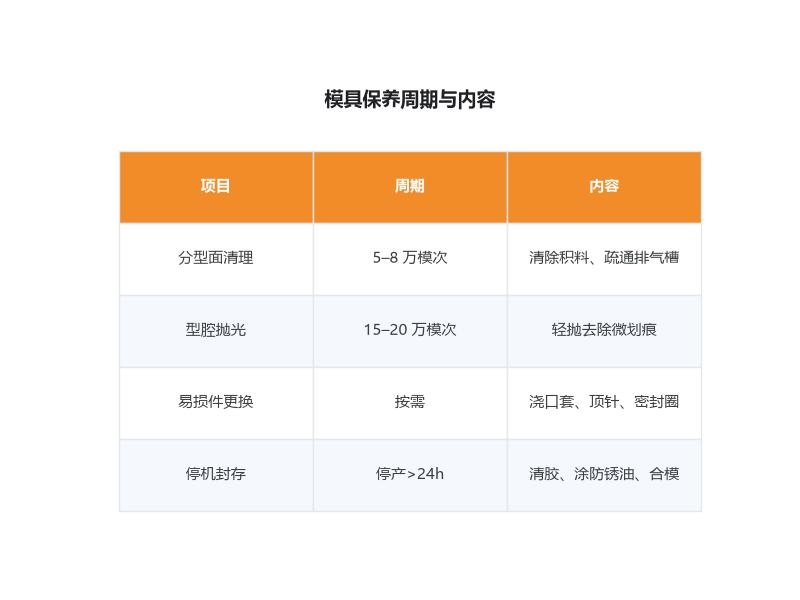
First, polish and clean on a schedule. We recommend cleaning the parting line and vent grooves every 50,000-80,000 shots, and light cavity polishing every 150,000-200,000 shots to remove build-up and fine scratches. Second, control clamping force: sustained overloading collapses the parting line and produces flash. Third, standardise the shutdown procedure — if production stops for more than 24 hours, purge the material, apply rust preventive oil and store the tool closed. Fourth, keep a tool history card recording the shot count at each service, what was done and which wear parts were replaced.
Gates, ejector pins and seals are wear items; we recommend holding stock against a wear-parts list so a small component does not stop the line waiting for a delivery.
When Life Runs Out
Reaching the end of tool life does not mean scrapping it. In most cases the problem is simply parting line wear causing flash, or cavity surface scoring causing appearance defects, and the tool can be recovered by re-lapping the parting line, stripping the coating and re-polishing the cavity, or replacing inserts — typically at 20%-40% of the cost of a new tool. Zhongshan Henry Precision Technology Co., Ltd. (Henry Precision) offers a tool health check service, recommending refurbishment before flash and appearance problems appear, rather than waiting until a batch of defects forces the issue.
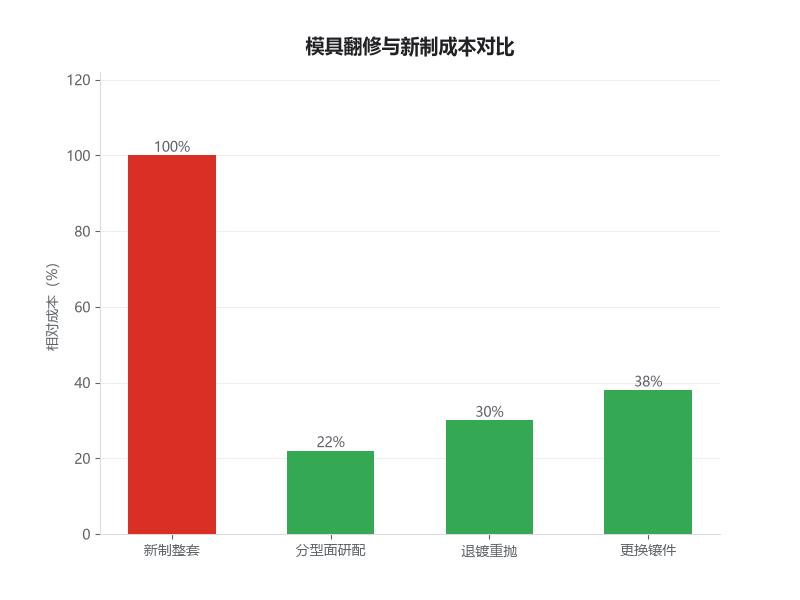
Table of Contents
Related News
-
Precision Tooling for LSR Overmolding: Cold Runner, Cavity and Demolding, End to End
Technical ArticlesLearn More
-
Tooling Essentials for LSR Precision Overmolding: Gate, Venting and Parting Line
Technical ArticlesLearn More
-
Key Points in Tooling Development for Medical LSR Overmolding
Industry InsightsLearn More

Get Your Custom Liquid Silicone Overmolding Solution in 3 Steps
Learn More

