













Platinum Catalysis and Catalyst Poisoning: The Hidden Killer in LSR Production


Overview: Platinum addition curing is the dominant cure mechanism for LSR, valued for speed, the absence of by-products and the purity of the finished part. But the platinum catalyst is extremely sensitive to certain chemicals, and trace contamination is enough to leave a part under-cured, tacky on the surface, or not cured at all.
How Addition Curing Works
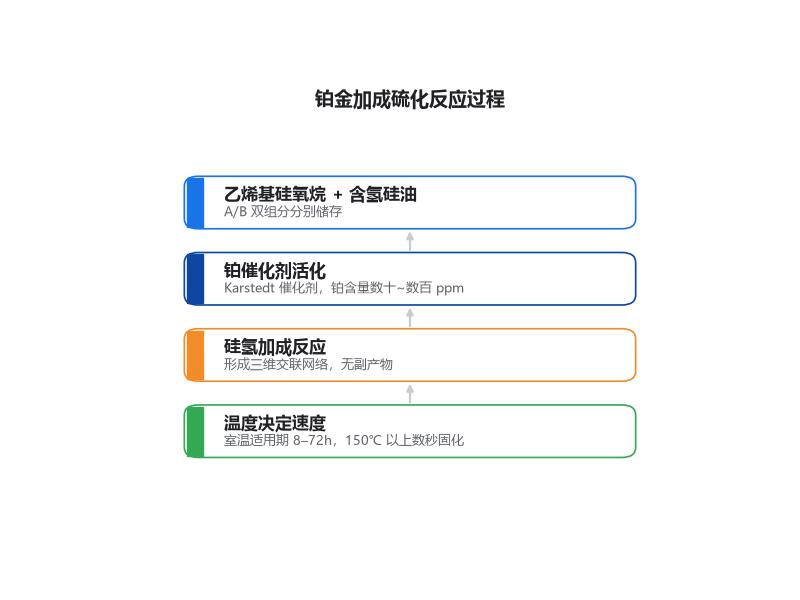
In platinum addition curing, a vinyl-functional polysiloxane and a hydrogen-functional silicone oil react through hydrosilylation in the presence of a platinum catalyst, usually a Karstedt catalyst at platinum levels from tens to hundreds of ppm, to form a three-dimensional crosslinked network. The reaction releases no by-products and is theoretically fully converted, which is the fundamental reason LSR achieves low odour and high purity.
Reaction rate is extremely temperature sensitive. At room temperature the pot life after A/B mixing is typically 8 to 72 hours depending on grade, while above 150 degrees Celsius cure takes only a few seconds to a few tens of seconds. That enormous difference in the temperature window is exactly what allows LSR to be stored cold and cured fast when hot.
Which Substances Poison It
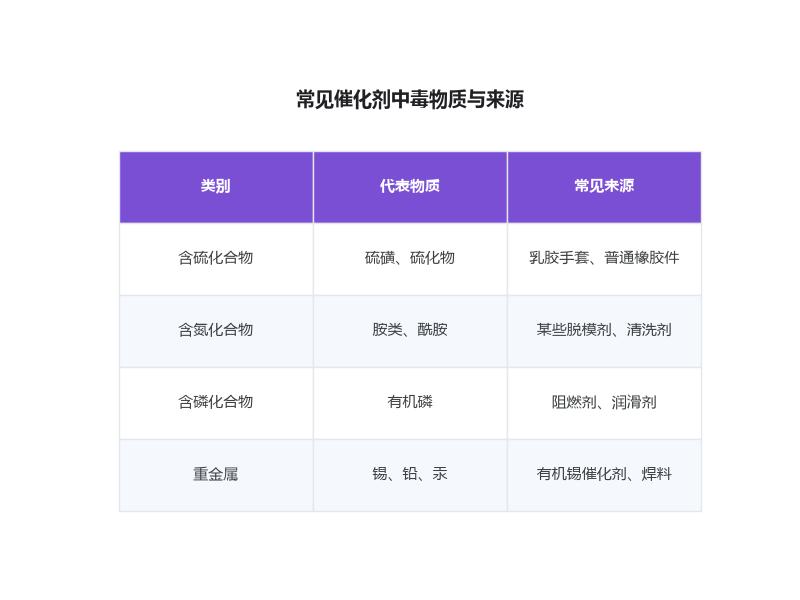
Catalyst poisons fall into four main groups: sulphur compounds (sulphur, vulcanized rubber, sulphur-containing gloves, some cutting fluids), nitrogen compounds (amines, amides, polyurethanes, some release agents), phosphorus compounds, and certain heavy metals, specifically organic compounds of tin, lead, mercury and arsenic. They form stable complexes with the platinum, deactivating the catalyst permanently.
The contamination sources most easily overlooked are: latex gloves, which contain sulphur; ordinary rubber parts stored next to silicone seals; rubber goods being cured elsewhere in the same workshop; amine-containing cleaners; and vapour from epoxy and polyurethane hardeners.
How Poisoning Shows Up
Mild poisoning shows up as slower cure, parts that are soft and tacky at demolding, and an uncured layer on the surface — extending the cure time only just gets them there. Moderate poisoning produces localized non-cure, part of the same shot hard and part of it sticky. Severe poisoning means the whole batch never cures, the compound staying liquid or semi-liquid in the cavity.
Diagnosis: take an uncured sample and run DSC to see whether the reaction peak has disappeared, or run a comparison — cure the suspect compound alongside known-good material under identical conditions and watch the difference. The fastest on-site check is a portable rheometer measuring the torque curve.
How to Prevent It
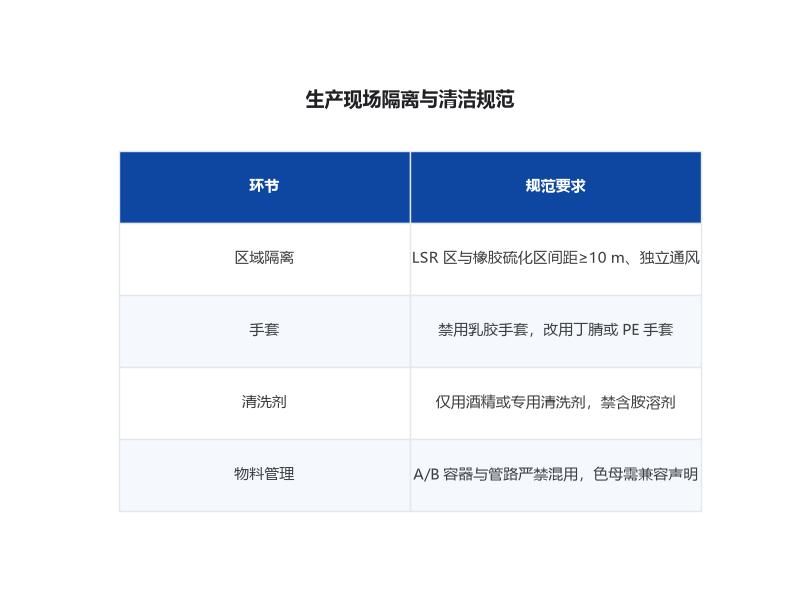
The production floor needs physical separation: keep the LSR molding area apart from general rubber curing, at least 10 metres away and not on the same ventilation circuit. Operators use nitrile or PE gloves; latex gloves are banned. Tools are cleaned only with alcohol or a dedicated cleaner, never with amine-containing solvents.
On material handling: containers and lines for the A and B components must never be interchanged, and colour masterbatch should come with the supplier's platinum compatibility statement. If a tool or insert has previously been in contact with sulphur-containing material, it needs thorough solvent cleaning and a blank trial shot to verify. Zhongshan Henry Precision Technology Co., Ltd. (Henry Precision) runs LSR workshops as dedicated zones with dedicated machines, and files compatibility records for every auxiliary material that enters them.
Recovery After Poisoning
Once poisoned, the compound cannot be recovered; it has to be scrapped. Tools and lines need thorough cleaning: circulate toluene or a dedicated cleaner through the feed pipes, strip the static mixer and replace it or burn it out, wipe the cavity with solvent, then run 3 to 5 shots of clean compound through to displace residue.
Verification afterwards is mandatory: run 10 consecutive shots, checking cure state on each — no dent when pressed with a fingernail, surface not tacky — and measure hardness to confirm it reaches the nominal value, before normal production resumes.
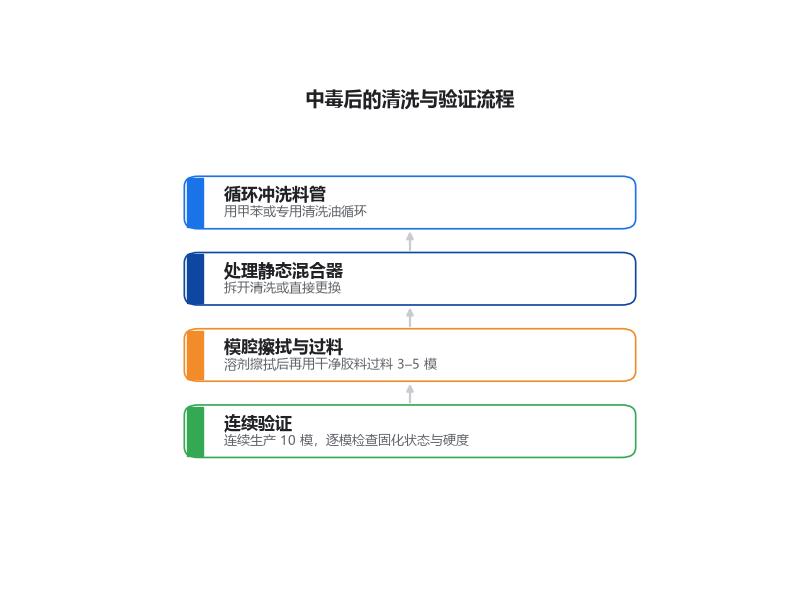
Table of Contents

Get Your Custom Liquid Silicone Overmolding Solution in 3 Steps
Learn More

