













Bonding LSR to Metal Inserts: From Surface Preparation to Self-Adhesive Grades


Insert Surface Preparation
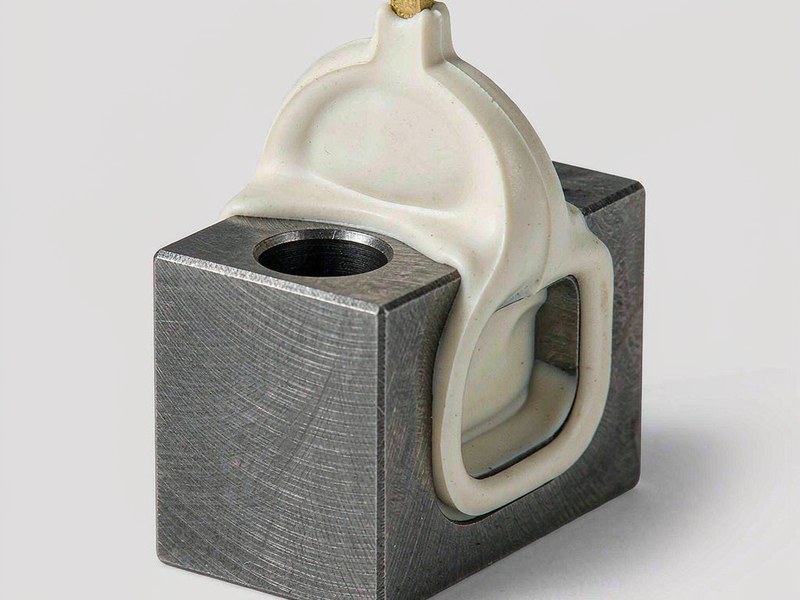
Surface condition sets the ceiling for bond strength. Common insert materials — aluminium, stainless steel, brass — come off the machine carrying cutting fluid, oil film and an oxide layer, and all of it has to go. The standard preparation sequence is: ultrasonic degreasing (60 degrees Celsius, 10 minutes), then blasting (0.1 to 0.2 mm alumina grit recommended, finishing at Ra 0.8 to 1.6 micrometres), then an isopropanol wipe, then drying. The micro-pits left by blasting provide mechanical interlock, which combined with chemical bonding can lift peel strength by more than 30 percent. Prepared inserts should be used within 8 hours; anything left longer needs cleaning again. Handling inserts with bare hands leaves grease behind, and that spot is where local bond failure starts. In production it is worth linking an insert washing line to an automatic feeding system, so the operator never becomes a contamination source.
Primer and Surface Activation
For metal substrates, primers are chosen from the silane coupling agent family, and can be applied by dipping, spraying or brushing, with film thickness held at 5 to 10 micrometres and 10 to 30 minutes of drying afterwards to let the solvent flash off. The thing to manage with primer is batch consistency: solids content varies between batches, film thickness moves with it, and bond strength moves with that. Fix the supplier and run incoming inspection. Where a primer-free route is wanted, plasma treatment generates highly reactive functional groups on the metal surface, and overmolding within 30 minutes of treatment gives the best result. In liquid silicone overmolding projects, primer generally delivers more stable bonding than plasma, at a higher process cost — the choice depends on how demanding the product's reliability grade is.
Self-Adhesive LSR Grades
Self-adhesive liquid silicone builds adhesion promoters into the compound, so it cures and bonds directly to metal with no primer, and in recent years it has become a significant route to lower cost and higher throughput in LSR precision overmolding. Three points need attention. First, substrate compatibility: different suppliers' self-adhesive grades behave very differently on aluminium, steel and copper, so any material switch means running the peel test again. Second, the process window is narrower — self-adhesive grades are more sensitive to mold and insert temperature, and bond strength can halve if the insert is not preheated enough. Third, cost and storage: these grades run roughly 20 to 40 percent above standard LSR per kilogram, and specified cold-chain storage and transport are required. On high-volume parts with many inserts, the labour and material saved by dropping primer usually covers the price difference.
Molding and Reliability Verification
Insert injection molding comes down to two things, temperature and positioning. Preheating the insert to 120 to 150 degrees Celsius raises interfacial reactivity substantially. In-mold location relies on locating pins and support pillars, with a clearance of 0.02 to 0.03 mm, and the first stage of injection runs slow so the insert is not pushed out of place. After cure, parts get a post-cure of 2 to 4 hours at 200 degrees Celsius, which raises crosslink density at the bond. Reliability verification should cover: 90-degree peel strength (at least 3.0 newtons per millimetre, and cohesive failure), torque retention (no rotation after loading to the assembly specification), air tightness (no continuous bubbles under water at 0.1 to 0.3 megapascals), and strength retention after damp heat aging (85 degrees Celsius at 85 percent relative humidity, 168 hours). Zhongshan Henry Precision Technology Co., Ltd. has built a four-part technical database — material, surface preparation, process and testing — for metal insert liquid silicone overmolding projects, and Henry Precision provides connector and sensor customers with a complete liquid silicone overmolding solution running from DFM review through to production validation.
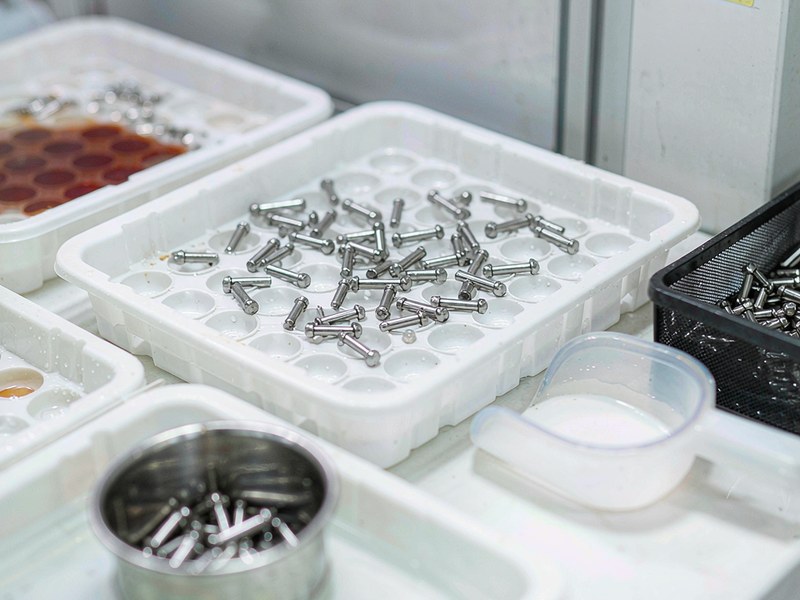
Table of Contents
Related News
-
Cleanroom Processing for LSR Precision Overmolding: Environmental Control and Contamination Prevention
Technical ArticlesLearn More
-
Dimensional Tolerance in LSR Precision Overmolding: How Micron-Level Accuracy Is Achieved
Technical ArticlesLearn More
-
Designing an Automated LSR Overmolding Line: Flexible Tool Change in Practice
Technical ArticlesLearn More

Get Your Custom Liquid Silicone Overmolding Solution in 3 Steps
Learn More

