













Southeast Asia Capacity Shift: Real Challenges and Underestimated Openings for China's LSR Overmolding Industry


Overview: There is much talk about supply chains moving to Southeast Asia, but the conclusions are often oversimplified. The real picture is that assembly is moving, while precision molding moves far slower than expected, held back by skilled workers, tooling supply chains and quality consistency requirements. For China's LSR companies this is both a buffer and a window to move up the value chain.
What Is Actually Moving
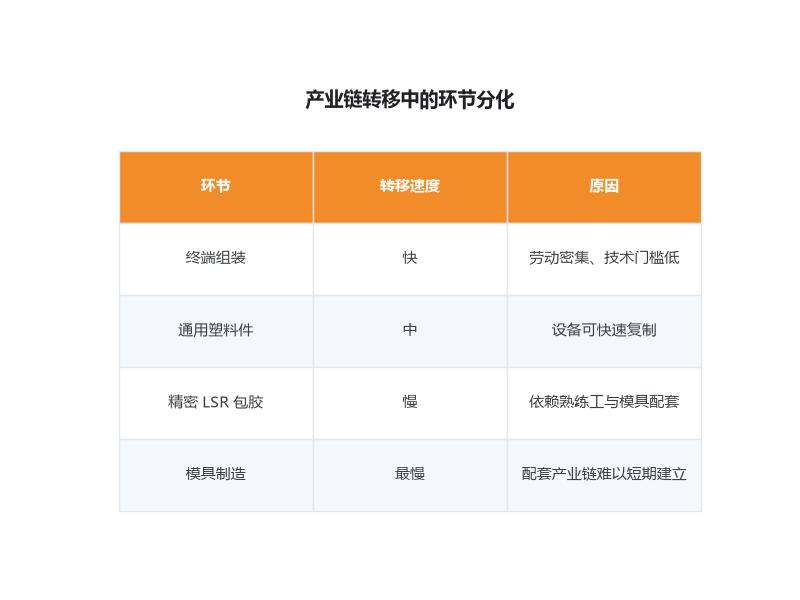
What is genuinely moving is labor-intensive assembly, plus some low-technology plastic parts. Precision LSR overmolding moves much more slowly, for three reasons. It depends on skilled toolmakers and process engineers, and developing them takes three to five years — Southeast Asia cannot supply them in the short term. It depends on a tooling supply chain — steel, machining, heat treatment, components — that is not yet localized. And parts with demanding quality consistency requirements make customers reluctant to switch.
The result is a division of labor: assembly outside, precision parts inside. Final assembly plants move to Vietnam and Thailand, but the critical silicone parts are still sourced from China.
How the Cost Math Works Out
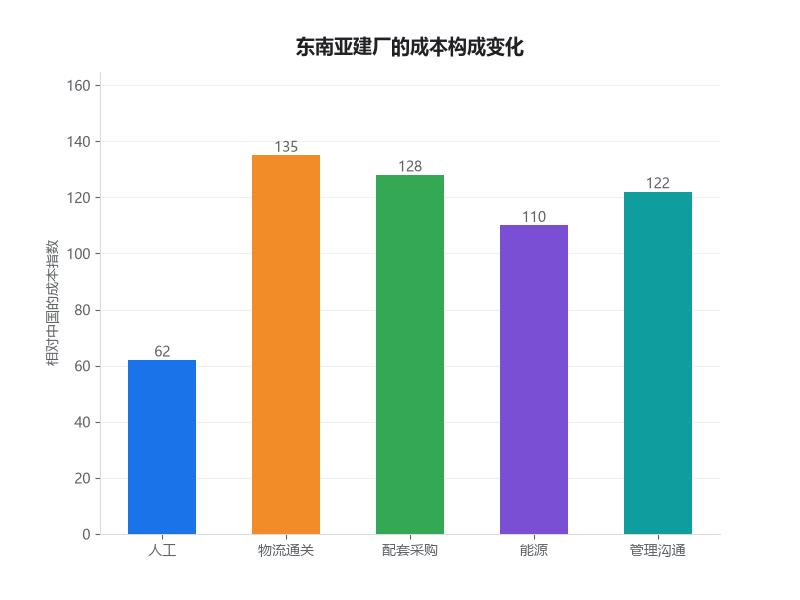
The labor cost advantage in Southeast Asia is narrowing, while hidden costs are routinely underestimated: logistics and customs clearance time, the sourcing radius for supporting parts, energy stability, and management and communication overhead. When companies add it all up after a move, total cost often drops far less than expected — and sometimes rises.
For precision molding specifically, equipment accounts for a large share of investment and labor a relatively small one, so a labor cost advantage carries less weight to begin with. An LSR molding machine plus cold runner tooling does not get cheaper because it sits in Vietnam.
The Underestimated Openings
The shift brings three openings. First, supplying assembly plants that have moved offshore — becoming a Tier 2 supplier that follows the customer, which actually increases exports. Second, capturing the tooling demand generated by the relocation, since new Southeast Asian plants buy molds from China. Third, the pressure pushes local companies toward higher value-added work, moving from contract molding into material selection, structural design and joint development.
The third matters most. When competing on low cost stops working, technical capability becomes the only defensible position.
How to Respond
Short term: hold existing customers and proactively offer support packages that follow them offshore — local warehousing, technical support, fast response — turning geography from a disadvantage into a service strength. Medium term: invest in automation, replacing labor with equipment to blunt the impact of wage differences. Long term: build capability upstream, establishing technical depth in material selection, mold flow analysis and structural design, moving from being able to make parts to being able to design them.
The choice at Zhongshan Henry Precision Technology Co., Ltd. (Henry Precision) is to keep investing in precision molding and fast response: compressing manufacturing cost through automation and standardization on one side, while building DFM and joint development capability on the other so that the cost of a customer leaving goes up. When supply chains are being rebuilt, being needed matters more than being cheap.
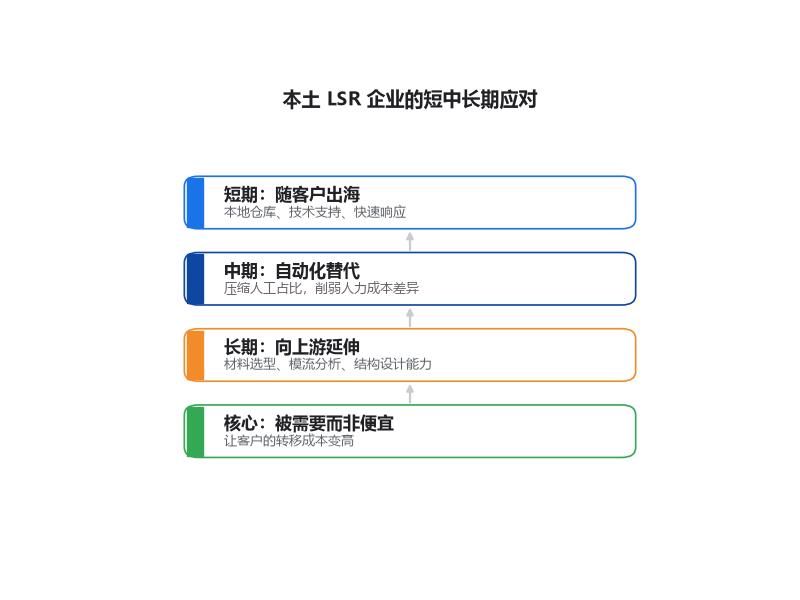
Table of Contents
Related News
-
Domestic LSR Overmolding Rises as Medical Supply Chains Localize
Industry InsightsLearn More
-
The Localization Wave: How to Evaluate a Medical LSR Overmolding Supply Partner
Industry InsightsLearn More
-
Localizing Medical-Grade LSR Overmolding: Progress and Remaining Gaps
Industry InsightsLearn More

Get Your Custom Liquid Silicone Overmolding Solution in 3 Steps
Learn More

