













The Certification Maze for LSR Overmolding: From ISO to USP Class VI


Overview: The same liquid silicone faces completely different certification requirements in a phone case versus an implantable device. Understanding the certification systems across medical, food, automotive and electronics is a supplier's pass into high-value markets, and the first filter brands apply when screening vendors.
Medical Systems
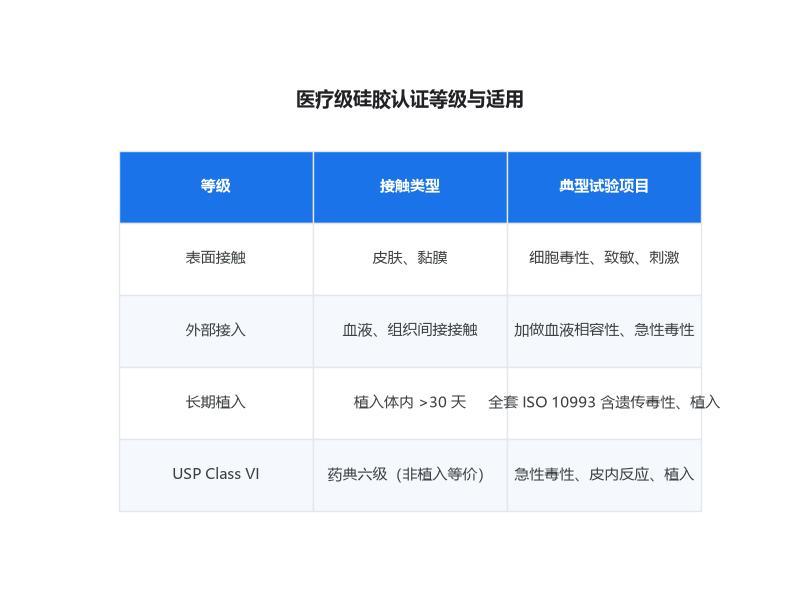
The core standards in medical are ISO 10993 (biological evaluation series) and USP Class VI (United States Pharmacopeia Class VI plastics test). ISO 10993 grades by contact site and duration: surface contact, external communicating, implant; duration under 24 hours, 24 hours to 30 days, over 30 days. Higher grades require more biological test items, including cytotoxicity, sensitization, irritation, acute systemic toxicity, hemocompatibility, genotoxicity and implantation studies.
USP Class VI is the best-known grade, covering acute systemic toxicity, intracutaneous reactivity and implantation. But it does not mean suitable for long-term human implantation — a long-term implantable device needs the full ISO 10993 evaluation, not USP Class VI alone.
Food Contact and Baby Care
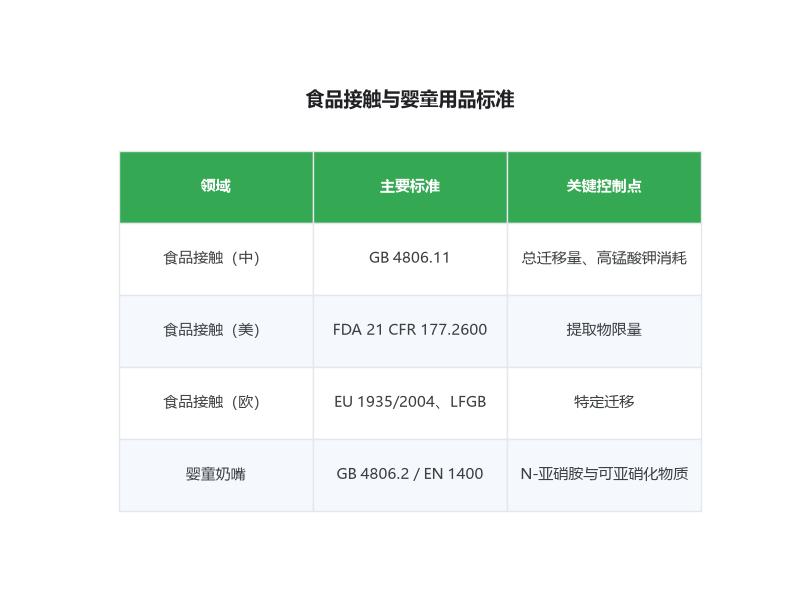
Food contact standards center on China's GB 4806.11 (rubber materials for food contact), the US FDA 21 CFR 177.2600, and the EU's EU 1935/2004 framework regulation plus Germany's LFGB. Core test items are overall migration, potassium permanganate consumption, heavy metals and specific substance migration.
Baby products — nipples, pacifiers and teethers — carry stricter requirements. China has GB 4806.2 specifically for nipples, and the EU has EN 1400. Beyond routine migration testing these also restrict N-nitrosamines and nitrosatable substances, the critical control point for silicone nipples, which must be managed in both formulation and curing.
Automotive and Electronics
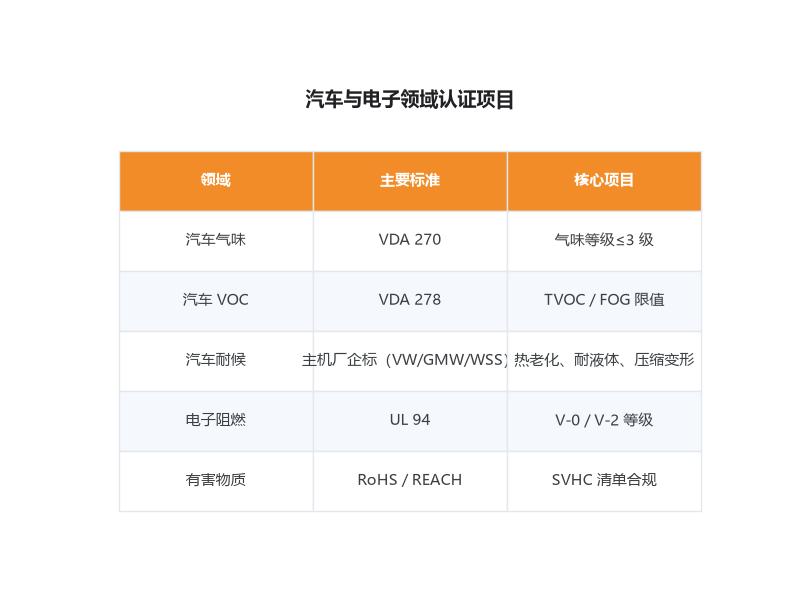
Automotive silicone material standards focus on heat aging resistance, fluid resistance, compression set and odor: typically OEM specifications such as VW 50180, GMW and Ford WSS, plus industry-wide VDA 270 for odor and VDA 278 for VOC and fogging. At component level there are also functional requirements for salt spray, vibration and thermal cycling.
Electronics focuses on flame retardancy (UL 94 V-0 and V-2), electrical insulation (dielectric strength, volume resistivity) and hazardous substance restrictions (RoHS, REACH, halogen-free). Electronics exported to the EU must also comply with the REACH SVHC list.
How Certification Gets Done
Practical advice. First, apply for certification per material grade plus process conditions — change the grade or the curing conditions and it needs re-evaluating. Second, prefer commercial grades that already hold certification, since certifying your own formulation costs a great deal. Third, keep complete production records and batch traceability, which auditors always check.
Also watch validity periods and change management: most certifications require annual surveillance audits, and material or process changes must be declared proactively. Zhongshan Henry Precision Technology Co., Ltd. (Henry Precision) clarifies the certification coverage of every material with customers to avoid compliance risk from out-of-scope use.
Table of Contents
Related News
-
What Certifications Does Medical-Grade LSR Overmolding Need - Is a Material Report Enough?
FAQSLearn More
-
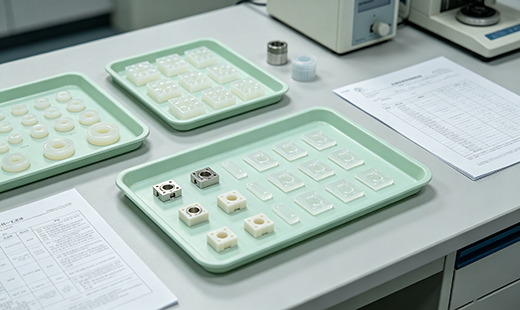
ISO 13485 Is More Than a Certificate: Full-Process Production Control for Medical LSR Overmolding
Industry InsightsLearn More
-
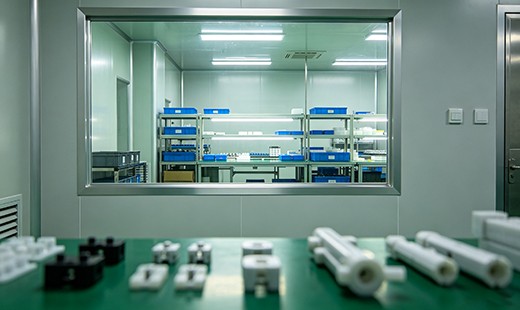
Stricter Device Registration Puts Supplier Compliance in the Spotlight
Industry InsightsLearn More

Get Your Custom Liquid Silicone Overmolding Solution in 3 Steps
Learn More

