













Multi-Colour and Multi-Durometer Molding: Advanced LSR Overmolding


Overview: Producing two colours or two durometers in a single molding cycle removes a secondary assembly step and improves structural reliability — the high end of LSR processing. The routes are a two-shot machine, overmolding, and zoned injection, each with its own boundary of application and cost difference.
Three Routes
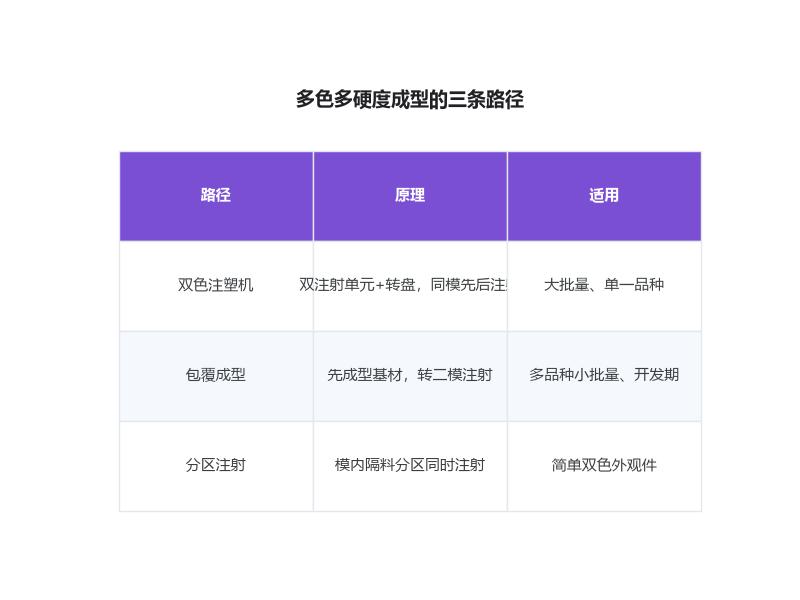
The first is two-shot or multi-shot molding: a dedicated machine with two injection units, using a rotary table or moving mold mechanism to inject two compounds in sequence within the same tool. The advantages are a short cycle and a high degree of automation; the disadvantage is heavy capital cost, typically two to three times a single-colour machine.
The second is overmolding: form the rigid substrate or the first silicone first, then transfer it into a second tool for injection of the second material. Capital cost is low and flexibility high, which suits several products in small batches. The third is zoned injection: partition a single cavity with a barrier feature and inject different colours at the same time, which suits simple two-colour cosmetic parts.
Combining Durometers
The classic application for multi-durometer one-piece molding is rigid support plus soft touch: a handle skeleton at 60 to 70 Shore A carries the load, while the grip surface at 20 to 30 Shore A gives a soft feel. On a seal, the sealing lip uses soft compound for conformity while the root uses harder compound for assembly strength.
The durometer gap between the two compounds is the key design variable. A difference of 15 to 30 Shore A gives the best interfacial bond; too large a gap, above 40 points, produces internal stress and interfacial cracking because the two shrinkage rates diverge. The two compounds must also share the same cure system, both platinum addition, or the interface will not crosslink properly.
Controlling the Interface
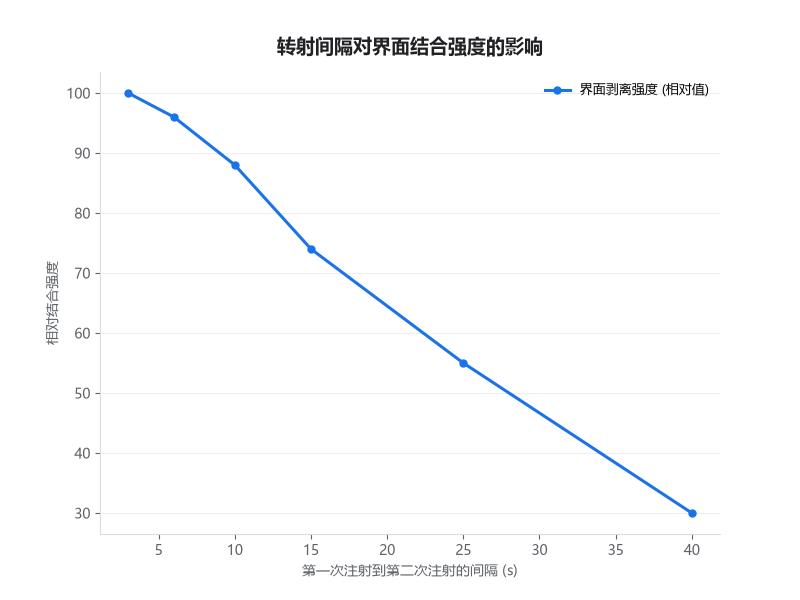
The heart of multi-colour molding is the interface. Temperature comes first: the surface of the first-shot compound has to stay reactive when the second shot goes in, which means the cure windows of the two compounds have to match, and the interval between the first and second injection has to be short, typically 5 to 15 seconds.
The flow front comes second: the second compound has to strike the surface of the first layer at enough temperature and pressure to achieve interpenetration and crosslinking at the molecular level. In practice the second shot's material temperature is often raised by 10 to 20 degrees Celsius and injection speed increased, to strengthen interfacial fusion. Where needed, a primer is pre-applied to the first layer surface.
Common Defects
Colour bleed is the most common cosmetic problem — the first compound overflowing into the second colour area. The answers are to optimize the shut-off face, 3 to 5 mm land width at 3 to 5 degrees, control injection pressure and the hold-pressure switchover point, and make sure the tool closes accurately.
Interfacial delamination usually comes from mismatched cure windows or interface contamination, and shows up as the two layers peeling apart by hand. The answers are to select grades whose cure speeds match, shorten the transfer time, clean the interface, and add a primer where necessary. Zhongshan Henry Precision Technology Co., Ltd. (Henry Precision) runs an interfacial peel test, requiring 100 percent cohesive failure, before scaling up any multi-colour project.
Cost and Selection
Which route to take depends mainly on volume. Above 500,000 parts a year on a single product, the efficiency of a two-shot machine pays back the investment. For several products in small batches, or during development, overmolding is the better economics. Where only a two-colour appearance is needed and the structure is simple, zoned injection costs the least.
Future extensibility also has to be weighed. A two-shot machine is highly dedicated and expensive to switch between products; with overmolding, the two tools can be used independently, giving better flexibility. The recommendation from Zhongshan Henry Precision Technology Co., Ltd. (Henry Precision) is to validate with overmolding during new product development, and only evaluate moving to a two-shot machine once the product mix has stabilized in production.
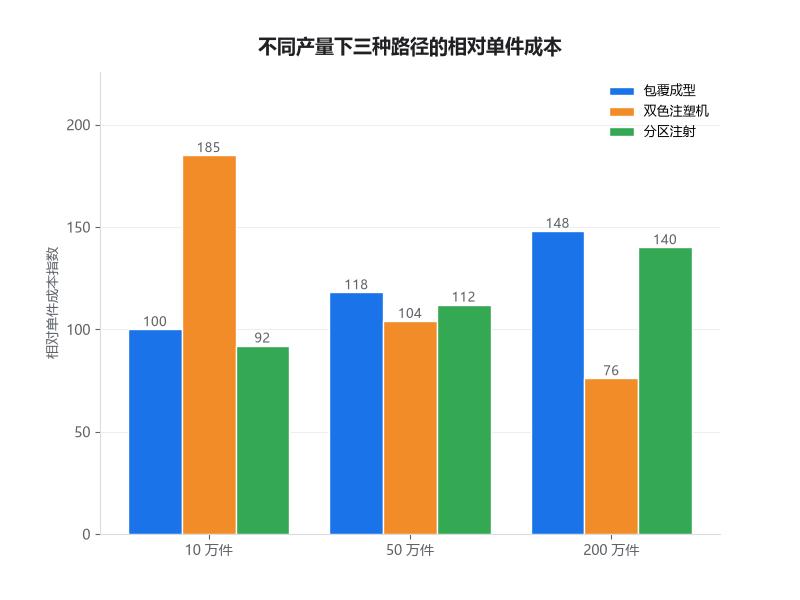
Table of Contents
Related News
-
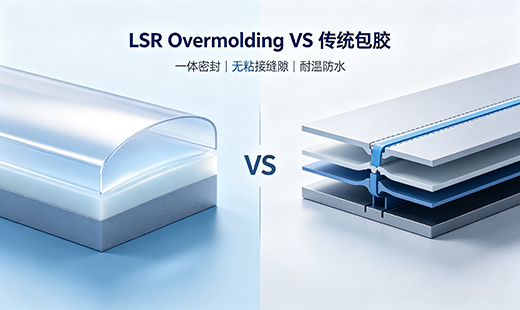
How LSR Overmolding Differs From Conventional Overmolding
Technical ArticlesLearn More
-
Custom LSR Precision Overmolding: Six Systems from Structural Review to Production Delivery
Technical ArticlesLearn More
-
Liquid Silicone vs. Solid Silicone: Choosing the Right Material for Precision Overmolding
Technical ArticlesLearn More

Get Your Custom Liquid Silicone Overmolding Solution in 3 Steps
Learn More

