













Sterilization Compatibility Guide for Medical LSR Overmolding: How Each Method Affects Parts


Many medical liquid silicone overmolding programs pass every check at the prototype and small-batch stage, then expose hidden defects once simulated terminal sterilization validation begins: delamination and debonding at the silicone-rigid insert interface, hardening and embrittlement of the silicone, substrate cracking and part discoloration. Sterilization is not simple disinfection — repeated temperature, pressure and radiation exposure keeps testing the composite interface and the substrate's tolerance.
Drawing on a large number of contact-type Class II medical overmolding programs, Zhongshan Henry Precision Technology Co., Ltd. has mapped the common failure mechanisms of LSR overmolded parts under the three mainstream sterilization processes — ethylene oxide, high-temperature high-pressure, and gamma irradiation — with countermeasures across material selection, structural design, process parameters and validation testing, intercepting sterilization risk before volume production.
Sterilization Failure Pain Points
An LSR overmold is a soft-rigid composite component, and failures rarely appear in the room-temperature as-molded state — they show up after sterilization cycles. Common failure symptoms include hidden interfacial delamination, hardening and embrittlement of the silicone, stress cracking in PPSU or PC substrates, yellowing, and a sharp drop in bond strength.
Many development teams test only at room temperature and skip reliability validation after simulated sterilization. Problems then surface at the device registration stage, forcing tooling rework and material changes that seriously delay the program.
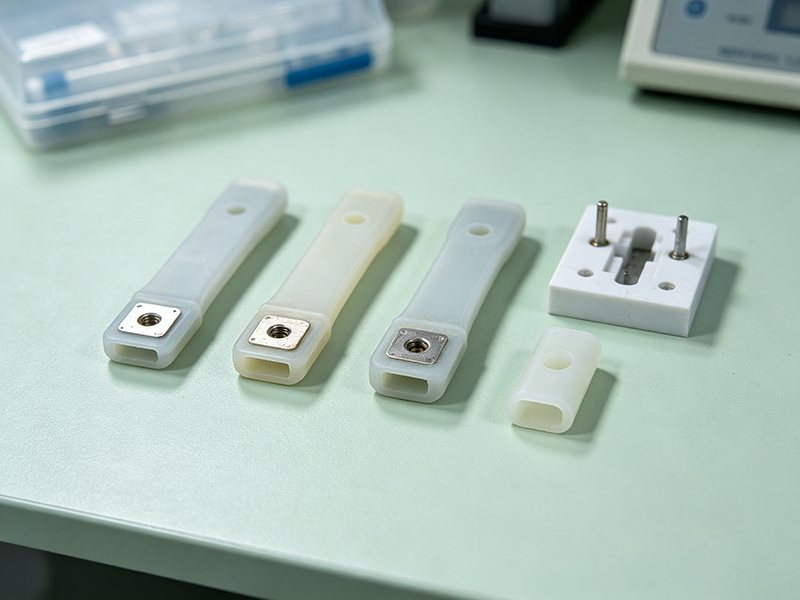
Ethylene Oxide (EO) Sterilization
EO sterilization is the most widely used method for medical products. Its core risks come from residual gas desorption and humidity-temperature cycling stress.
LSR silicone absorbs EO gas, and insufficient desorption leaves residual bleed risk.
The alternating temperature and humidity of the sterilization cycle, combined with the different coefficients of thermal expansion of silicone, plastic and metal, keeps pulling at the overmolded interface.
Primer and plasma treatment layers lose bond performance after repeated EO cycles. High-reliability medical products need multiple simulated EO cycle validations, not a single sterilization test.
High-Temperature High-Pressure Sterilization
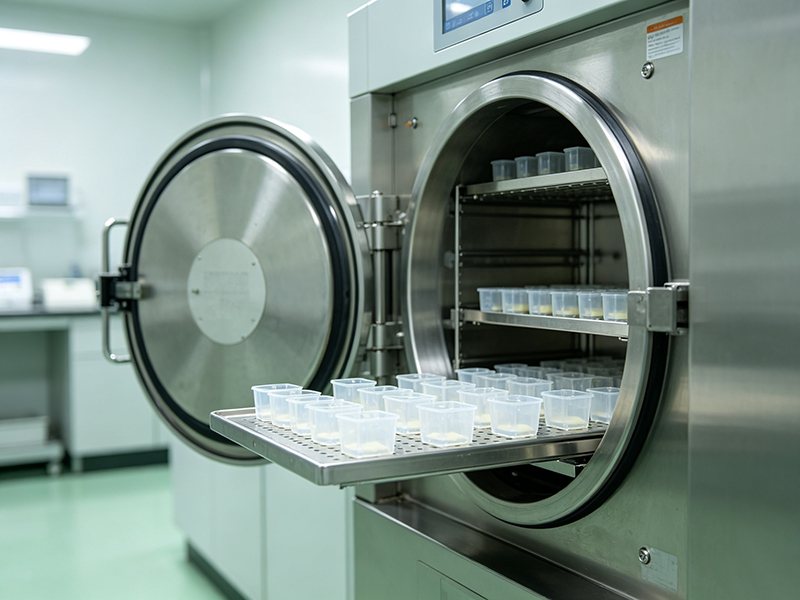
High-temperature high-pressure (moist heat) sterilization sets the highest tolerance bar for materials: 121 degrees Celsius plus a water vapor environment.
Risk points: thermal stress release in plastic substrates such as PPSU and PC, with the soft-rigid interface expanding and contracting repeatedly; general-purpose LSR losing physical properties under prolonged high-temperature water vapor; and cracking readily starting at sharp corners along the insert-silicone boundary.
Limitation: some plastic substrates simply do not tolerate repeated high-temperature high-pressure cycling, so substrate tolerance has to be assessed at selection time rather than patched later.
Gamma Irradiation Sterilization
Gamma sterilization uses high-energy radiation, which breaks polymer molecular chains.
After irradiation, LSR tends to harden, become brittle and lose elongation.
PC and some modified nylons yellow and develop internal microcracks after irradiation.
Primer bond layers at the interface take radiation damage, causing the overmold to debond. Standard LSR grades do not suit high-dose irradiation — radiation-resistant medical LSR grades must be specified.
Material Selection Countermeasures
EO sterilization: prefer low-extractable medical LSR and assess the aging resistance of the primer chemistry.
High-temperature high-pressure: confirm the moist-heat rating of the insert substrate and specify hydrolysis-resistant LSR.
Gamma irradiation: radiation-modified LSR is mandatory, and the irradiation tolerance of the plastic insert has to be assessed at the same time.
Important: never assume a general-purpose medical silicone suits every sterilization method — check the sterilization tolerance figures on the material specification.
Structural Design Essentials
No sharp corners where soft meets rigid — add fillets to release thermal stress from sterilization cycles.
For high-risk products, add mechanical interlocks as a safety margin against chemical bonding failure.
Avoid enclosed cavities, reducing sterilant gas residue and making gas desorption easier.
Production Process Control
Tightly control plasma parameters and primer coating thickness to reduce weak points at the interface.
Ensure complete silicone curing in production — under-cured silicone degrades readily under sterilization.
Control contamination through clean production, since impurities accelerate material aging under radiation and heat.
Sterilization Validation Requirements
Run multiple simulated sterilization cycles rather than a single pass, then re-test peel strength and sealing performance after aging.
Define acceptance criteria up front, covering appearance, bond retention and dimensional drift limits.
Keep retained samples from every validation batch so root causes can be traced when field issues appear.
What Practice Has Taught Us
Sterilization compatibility is not optional in medical LSR overmolding. You do not adapt the part to sterilization after it is built — you lock the terminal sterilization process at the design stage. Material grade, DFM structure, production process and reliability validation all have to be defined together around the sterilization conditions.
Henry Precision steps in early to assess sterilization conditions, selecting materials, running DFM structural review and simulated sterilization reliability testing against the customer's actual method — helping medical device companies avoid volume production failures caused by sterilization.
Table of Contents


Get Your Custom Liquid Silicone Overmolding Solution in 3 Steps
Learn More

