













Ultra-Thin LSR Overmolding: Process Challenges and Control


Thin-Layer Applications
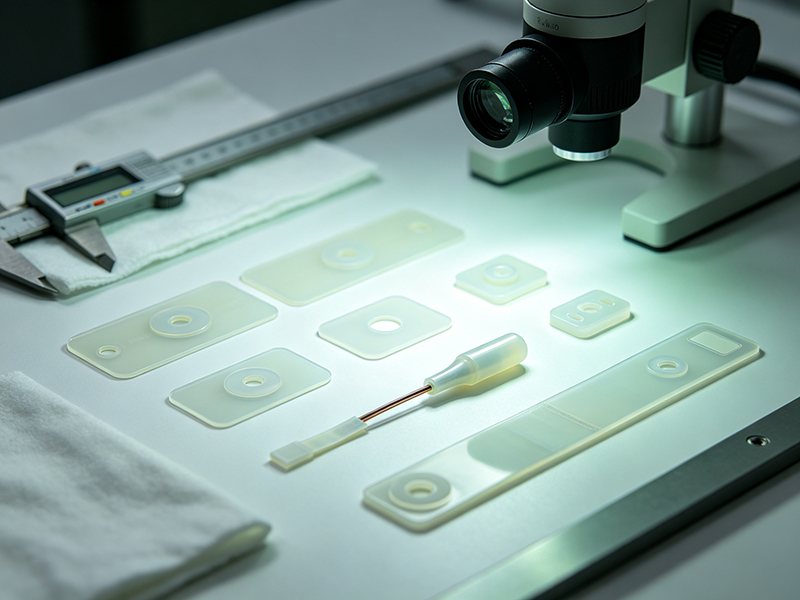
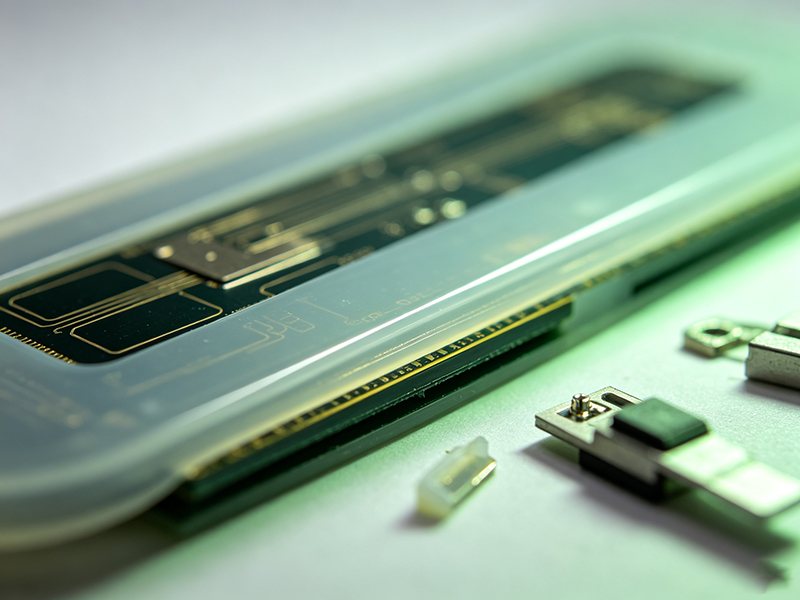
Portable medical monitoring sensors, miniature probes and wearable physiological acquisition components commonly require silicone overmolding layers as thin as 0.1-0.3 mm, balancing flexibility, signal transmission and waterproof sealing. Ultra-thin overmolding is substantially harder than conventional wall thicknesses, and readily shows short fills, localized voids and uneven thickness.
Pain Points in Ultra-Thin Molding
Silicone meets high flow resistance in the runner, so thin areas are hard to fill and short shots are common; the narrow cavity is difficult to vent and traps bubbles easily; injection pressure is high, which can push inserts out of position; and because the layer is so thin, minor tool wear or parameter drift will push local thickness out of tolerance, affecting both sealing and feel.
Remaining Core Challenges
Full-Spectrum Control Plan
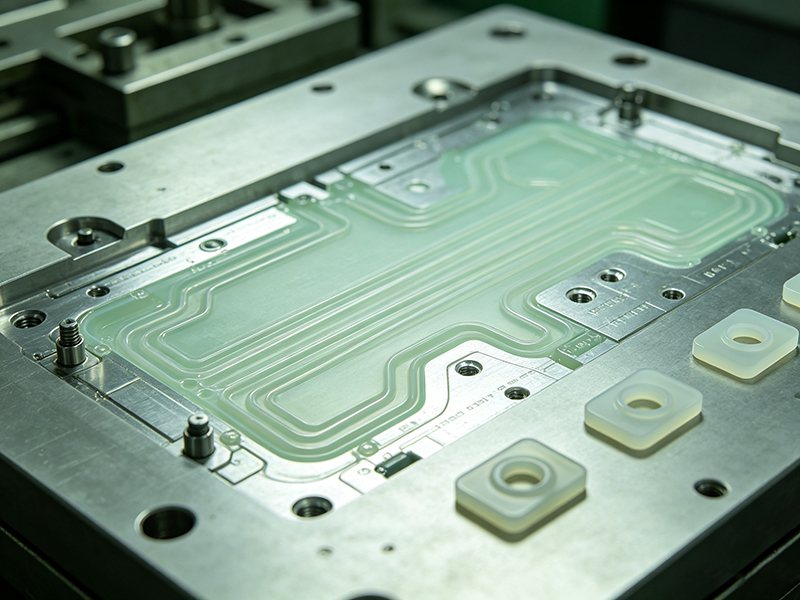
On materials, prefer low-viscosity medical-grade LSR for better flow. On tooling, place gates as close to the thin area as possible, optimize venting grooves and hold high vacuum. Use multi-stage injection with slow filling at the thin section to avoid turbulent air entrapment. Use multiple locating features on inserts to resist injection pressure. Tightly control mold temperature and hold pressure windows to shrink process variation.
Inspection and Volume Assurance
In production, add sampling inspection of silicone layer thickness and track tool wear trends. In sampling, simulate production conditions rather than judging feasibility from lab-scale machine samples alone. Evaluate rebound and tear resistance of the thin silicone layer after long-term aging to meet the service life of the medical product.

Table of Contents



Get Your Custom Liquid Silicone Overmolding Solution in 3 Steps
Learn More

