













Global LSR Market Size and Regional Landscape: Five Years in Data


Overview: The global liquid silicone rubber market is in a steady expansion phase, with Asia-Pacific the fastest growing region and China both the largest producer and largest consumer. By demand structure, medical, automotive and consumer electronics contribute most of the increment, while regional capacity is shifting from Europe and North America toward Asia.
How Big Is the Market
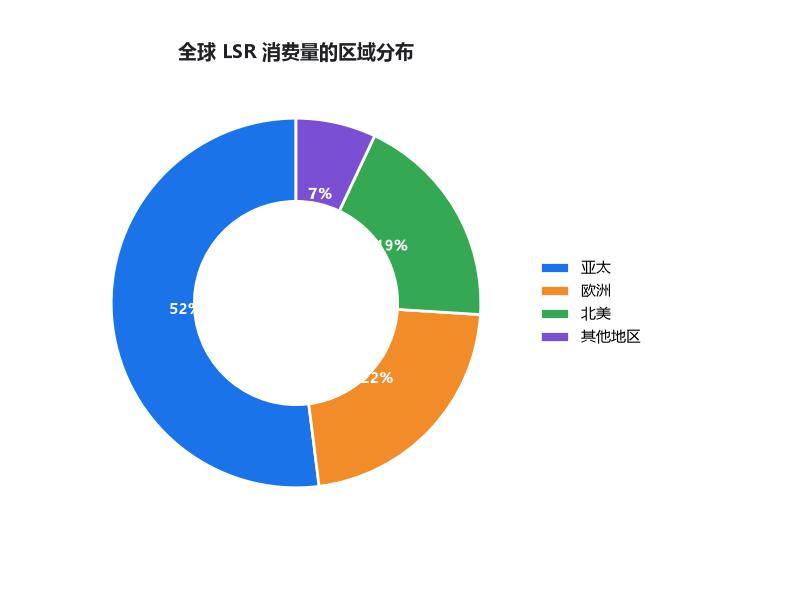
Public market research puts the global LSR market in the multi-billion dollar range, with a compound annual growth rate holding in the 6 to 9 percent band, well above the 2 to 3 percent typical of conventional synthetic rubber. By volume, global LSR consumption runs in the hundreds of thousands of tonnes, with Asia-Pacific already above 50 percent.
The growth gap comes down to application mix. Mature markets — Europe, the US, Japan — center on medical and automotive, growing steadily. Emerging markets — China, Southeast Asia, India — are pulled along by consumer electronics and appliances, growing faster.
Three Demand Engines
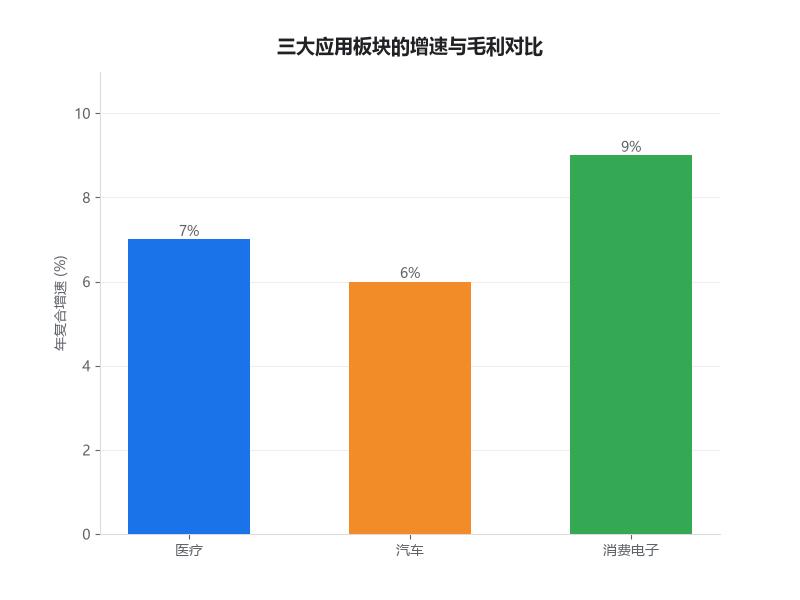
Medical is the segment with the highest unit price and the highest barriers: single-use consumables, catheters, respiratory masks and implant device encapsulation all demand exceptional biocompatibility and clean production, with gross margins reaching 30 to 50 percent. Automotive is the largest by volume: seals, harnesses and sensor overmolding, with per-vehicle LSR content rising steadily as vehicles electrify and get smarter.
Consumer electronics grows fastest but fluctuates most: TWS earbuds, smart wearables, waterproof phone accessories and AR/VR devices all track end-product cycles closely. These three segments carry different risk and return profiles, so suppliers usually need a portfolio to balance the swings.
Capacity Moving to Asia
On capacity, the major global LSR material suppliers — Wacker, Momentive, Shin-Etsu, Dow Corning and others — are all expanding in Asia-Pacific, and China's share of global LSR capacity keeps rising. Downstream molding and processing is even more concentrated, in the Pearl River Delta, the Yangtze River Delta and Southeast Asia.
This shift carries two implications. For local molding companies, raw material supply gets easier and cheaper. But competition also intensifies — between local companies, and between local and Southeast Asian players.
What to Watch Over Five Years
Three variables deserve attention. First, new demand from humanoid robotics and flexible electronics: flexible joints and electronic skin may drive high-precision thin-wall overmolding volume over the next three to five years. Second, tightening medical and food contact regulations, which raise the entry bar while favoring compliant companies that hold certifications. Third, rising green manufacturing requirements, with development of low-VOC, recyclable and bio-based silicone accelerating.
For local companies, the divide in the next stage runs from being able to make a part to making it precisely, compliantly and quickly. Zhongshan Henry Precision Technology Co., Ltd. (Henry Precision) reads it this way: over the next five years industry concentration will rise, small shops without technical depth or certification capability will be squeezed out, and companies with precision molding and fast response capability will take more share.
Table of Contents
Related News

Get Your Custom Liquid Silicone Overmolding Solution in 3 Steps
Learn More

