













LSR Precision Overmolding in Consumer Electronics: IP68 Waterproofing and Micron-Level Manufacturing


1. The Waterproofing Problem
Consumer electronics are moving fast toward thinner, more highly integrated designs, but the thinner the body and the more ports it carries, the harder it gets to balance water and dust resistance against feel. Whether it is a phone charging port or SIM tray, or the straps and sensors of TWS earbuds and smartwatches, the material has to deliver soft elasticity, precise dimensions and durable sealing all at once. Conventional solid silicone and TPE increasingly struggle with miniaturization, aging resistance and micron-level accuracy, while LSR — with its low viscosity and high flow plus excellent rebound — has become the material of choice for precision overmolding in 3C.
2. Precision Overmolding
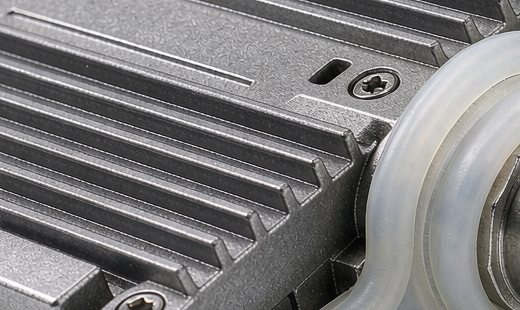
The essence of liquid silicone precision overmolding is one-piece molding. In two-shot (2K) molding, LSR is injected onto a plastic mid-frame or metal bracket already placed in the tool, and after high-temperature curing it becomes one with the substrate — no adhesive, no secondary assembly, and no leak path from the outset. Thanks to its low viscosity, LSR fills micro textures down to 10 micrometers and reproduces structures within plus or minus 0.05 mm. A sealing lip plus labyrinth path design holds lip compression between 15 and 30 percent, consistently delivering IP67 and even IP68 ratings. LSR overmolding on physical buttons also survives more than 5,000 presses while keeping its seal.

Figure 1 Macro close-up of a two-shot liquid silicone precision overmolded waterproof structure
3. Typical Applications
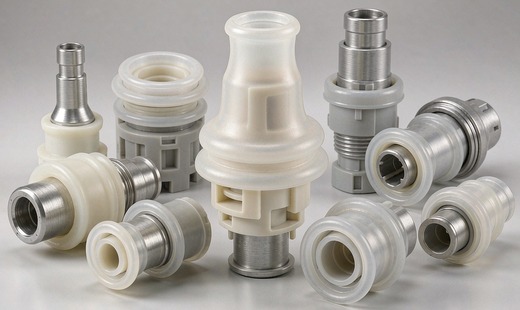
In practice, LSR reaches almost every detail of consumer electronics. Type-C ports and SIM trays on phones and earbuds get seamless sealing through LSR overmolding. Smartwatch and band straps use its skin-friendly, sweat-resistant and UV-stable properties for comfortable wear. At the hinge of a foldable phone, the FPC is encapsulated in LSR to improve flex fatigue resistance and provide insulation. In TWS earbuds, speakers, microphones and other acoustic parts use LSR damping to improve sound quality. From a grain-of-rice button to a full device mid-frame, LSR holds accuracy and efficiency.

Figure 2 Collection of consumer electronics liquid silicone precision parts
4. Industry Trends
As wearables, IoT, foldable screens and AR/VR spread, demand for LSR in consumer electronics keeps climbing. Against thermoplastic elastomers such as TPE, LSR holds clear advantages in temperature range (minus 60 to 200 degrees Celsius), UV resistance, low compression set and chemical resistance, noticeably extending device life and cutting after-sales and warranty cost. Runnerless, fast-cure injection molding also means less material waste and lower energy per part, which fits the green manufacturing trend. Ahead, conductive LSR and flexible sensor encapsulation will open further room for growth in 3C precision overmolding.
5. Henry Precision
Zhongshan Henry Precision Technology Co., Ltd. has long focused on liquid silicone precision overmolding, developing and manufacturing high-precision, high-consistency silicone components. Backed by precision tooling, two-shot molding and micron-level process control, Henry Precision supplies consumer electronics customers with custom solutions ranging from waterproof seals and button overmolding to straps and acoustic damping parts, helping 3C products reach higher waterproof ratings and a finer touch.
Table of Contents
Related News

Get Your Custom Liquid Silicone Overmolding Solution in 3 Steps
Learn More

