













Medical-Grade LSR Precision Overmolding: Biocompatibility and Precision Manufacturing


1. Medical Scenarios: Material Is the Lifeline of Safety
The biggest difference between medical devices and ordinary industrial products is that the material contacts human tissue directly or indirectly. Failure of any seal, catheter, diaphragm or sensor encapsulation can lead to infection, allergic reaction or more serious clinical risk. US FDA 2024 recall data shows material-related failures account for close to 15 percent of Class I and Class II medical device recalls — roughly one in every seven recalled devices traces back to the material itself. It is precisely this relentless pursuit of safety that created a strict threshold when the medical industry selects elastomers: biocompatible, non-toxic, able to withstand repeated sterilization, and capable of high-precision, complex-geometry volume production. Medical-grade liquid silicone (LSR) meets all of these demanding requirements, which is why it has become the gold standard material for precision medical device overmolding.
2. Medical Silicone: A High-Purity Platinum-Catalyzed System
Medical-grade LSR is a two-component, platinum-catalyzed silicone elastomer, made by blending component A (base polymer) with component B (crosslinker plus platinum catalyst) at a precise ratio before injection. Compared with industrial- or food-grade silicone, medical-grade LSR carries significantly stricter requirements for raw material purification, process control and biocompatibility validation. Against peroxide-catalyzed systems, platinum-catalyzed (addition cure) produces no peroxide by-products and contains no organic plasticizers, phthalates or latex additives; curing is clean and residue-free, making it the default choice for implantable-grade and long-term body-contact devices. Mainstream medical LSR grades on the market — DuPont Liveo, Wacker SILPURAN, Elkem Silbione, Momentive and others — are all built around platinum catalysis, with hardness spanning Shore A 30 to 70 to cover everything from soft seals to highly elastic structural parts.
3. Biocompatibility: The Logic of Coexisting With the Body Long Term
Biocompatibility is the first threshold a medical material has to clear before clinical use. It requires that the material produce no toxicity, sensitization, irritation or immune rejection on contact with the body. Liquid silicone is biologically inert, does not leach plasticizers or additives, and is naturally low in sensitization risk, so it is widely used in both short-term (under 30 days) and long-term (over 30 days, up to several years) medical devices inside and outside the body. At the validation level, medical-grade LSR usually has to pass the ISO 10993 series of biocompatibility tests (cytotoxicity, sensitization, irritation, systemic toxicity and so on), plus USP Class VI, which represents the highest tier of in vivo biological reactivity testing for implantable-grade materials. The new ISO 10993-1:2025 released in November 2025 goes further, requiring manufacturers to systematically identify biological hazards and align biological risk evaluation with ISO 14971 risk management principles — the compliance bar keeps rising.
4. Platinum Catalysis: What Decides Purity and Long-Term Stability
In medical-grade LSR manufacturing, the choice of curing chemistry directly affects a device's biocompatibility and long-term safety. Platinum-catalyzed (addition cure) systems cure fast, generate no harmful by-products and can meet ISO 10993 and USP Class VI, so they are the first choice for medical applications. Peroxide systems, though cheaper, need 2 to 4 hours of high-temperature secondary vulcanization to drive off volatiles, and if that is mishandled, residual by-products can bleed out and cause irritation — which is why they have largely been phased out in medical work. For precision overmolding, platinum catalysis also brings process advantages: low viscosity lets it fill complex cavities completely at low pressure, fast curing keeps batches consistent and throughput high, and mold fouling drops sharply, cutting cleaning and changeover time — raising output while preserving purity.
5. Sterilization Resistance: Repeated Sterilization Without Losing Performance
Medical devices have to survive repeated, aggressive sterilization, and few materials handle multiple sterilization methods as comfortably as LSR. Under high-pressure steam sterilization (121 to 134 degrees Celsius), LSR keeps its physical properties and dimensional integrity through hundreds of cycles. Under gamma and e-beam sterilization, its high resistance to radiation degradation means it does not embrittle and fail the way some thermoplastics do. Ethylene oxide (EtO) sterilization calls for low volatility and low extractables, which low-VOC (under 0.5 percent) LSR satisfies. This multi-method tolerance is why LSR has become the default material for reusable instruments and sterile single-use components alike.
6. Precision Overmolding: Micron-Level Tolerances and Complex Structures
The low viscosity of liquid silicone lets it flow into extremely fine mold cavities, faithfully reproducing fine detail and complex geometry with micron-level dimensional control. Medical-grade LSR injection molded parts are commonly held within plus or minus 0.05 mm, and parting-line flash can be kept below 0.1 mm — critical for catheter tips, seals, diaphragms and micro connectors, where sealing performance and dimensional consistency are paramount. Liquid injection molding (LIM) also supports precision overmolding onto plastic or metal substrates, integrating sealing, cushioning and insulation in a single part, cutting assembly steps and potential contamination points. Overmolding a soft silicone layer onto a surgical instrument handle, for example, improves grip comfort while adding slip resistance and sterilization compatibility — several gains at once.

Figure 2 Macro close-up of a medical liquid silicone seal: micron-level tolerance and biocompatible surface
7. Cleanroom Production: Controlled From Raw Material to Finished Part
Medical silicone components are usually produced in ISO Class 7 or cleaner cleanrooms, with batch traceability required across raw material, tooling, molding, post-processing and packaging. Cleanroom injection molding controls dust and microbial contamination, while controlled temperature, humidity and airflow protect batch consistency and the initial cleanliness of parts before sterilization. Clean management of a precision overmolding workshop and high-purity platinum-catalyzed material reinforce each other: one keeps the process free of contamination, the other keeps the material itself pure. Only together can they support the quality floor that implantable-grade and Class III medical device components require.
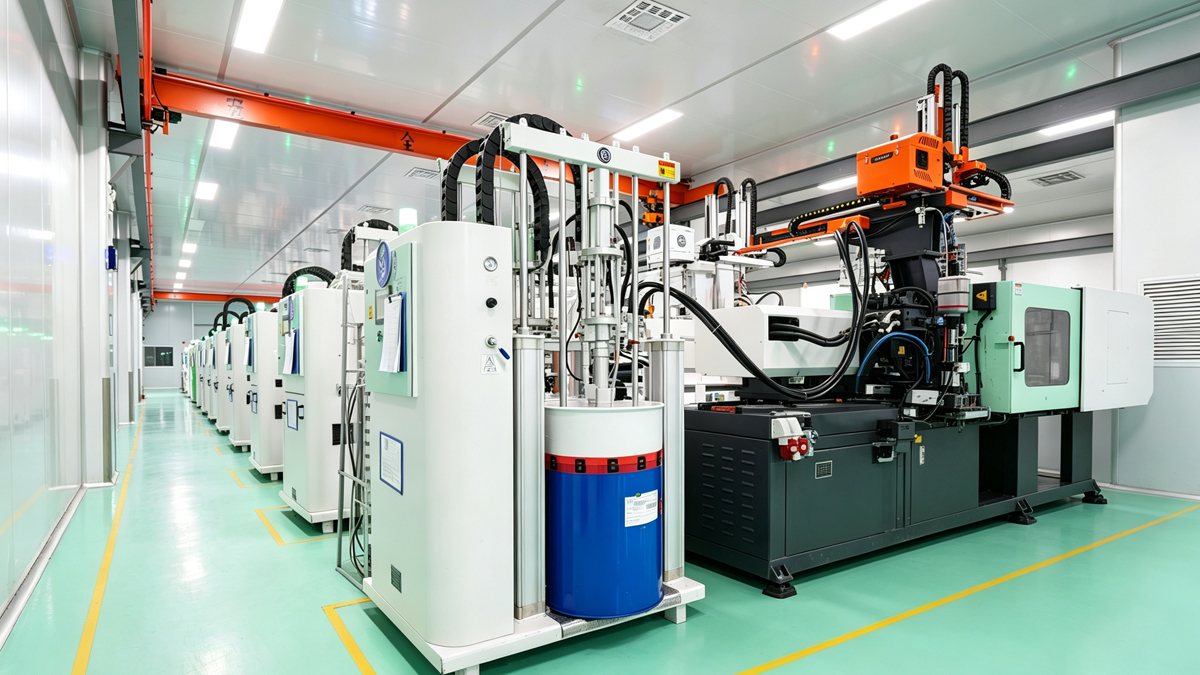
Figure 3 Cleanroom liquid silicone injection molding workshop for medical devices
8. Implantable Devices: The Ultimate Test of Long Service
Implantable devices are the highest-bar application for medical-grade LSR. Pacemaker lead insulation, cochlear implants, hydrocephalus shunt valves, breast implants and joint replacement cushions all rely on platinum-catalyzed implantable-grade silicone for its low extractables, oxidation stability and decades-long service record. Implantable-grade material has to clear USP Class VI and rigorous in vivo implantation studies, proving it does not degrade, bleed or provoke immune response in the body over the long term. For a precision overmolding manufacturer, implantable-grade orders mean compliance depth across the whole process: raw material master files (MAF/DMF), batch COA, tooling validation, bio-burden cleaning, and sterile barrier packaging to ISO 11607 — no link in the chain can be weak.
9. Respiratory and Anesthesia: Balancing Softness, Clarity and Sealing
Respiratory and anesthesia devices are among the most mature, highest-volume applications of LSR. Masks, ventilator valves, oxygen delivery systems and anesthesia circuit connectors all require a material that is transparent for observation, soft enough to conform to the face, and resilient enough to maintain a seal. LSR's low compression set means it still springs back and seals after prolonged compression, avoiding leaks. These reusable devices also undergo repeated steam or EtO sterilization, and LSR's sterilization resistance keeps them clear, non-yellowing and supple after hundreds of cycles, noticeably extending service life and lowering hospital replacement cost.
10. Infusion and Drug Delivery: Core Parts for Precise Fluid Control
In infusion, injection and drug delivery systems, LSR is used for syringe plunger seals, peristaltic pump tubing, diaphragm pumps and valve seats, among other critical parts. Silicone's chemical resistance and low coefficient of friction keep drug delivery stable and accurate, while low compression set ensures the plunger seal retains sealing force after long storage, preventing leakage or contamination. Peristaltic pump tubing is a typical high-frequency dynamic application — squeezed thousands of times per minute, yet required not to rupture, collapse or bleed over billions of cycles. LSR's high tear strength and excellent resilience make it irreplaceable in this scenario.

Figure 4 Collection of liquid silicone precision parts for medical devices
11. Microfluidic Chips: Precision Overmolding Powers In Vitro Diagnostics
Microfluidic chips and lab-on-a-chip devices are where LSR precision manufacturing capability shows most clearly. Liquid silicone's low viscosity allows it to fill molds with sub-millimeter or even micron-scale microchannels, accurately reproducing channel structures to produce disposable chips and micro seals for point-of-care testing (POCT) and molecular diagnostics. In in vitro diagnostic (IVD) equipment, LSR is also used for reagent sealing diaphragms, sampling needle seals and test card elastomers, where its low extractables and biological inertness prevent reagent contamination and safeguard the accuracy and repeatability of test results.
12. Wearable Medical Devices: Comfort, Skin Friendliness and Sensor Integration
Wearable medical devices — continuous glucose monitoring (CGM), ECG patches, biosensors and smart patches — place demands on the skin-contacting elastomer for skin friendliness, low sensitization and long wear. LSR's low modulus and soft touch deliver comfortable wear, while its hydrophobic surface reduces microbial attachment and lowers skin irritation risk. An even more promising direction is sensor encapsulation: as an encapsulant, LSR protects flexible electronics and sensing elements from body fluids while remaining biocompatible — paving the way for integrated wearable and implantable sensors.
13. Compliance Standards: The Pass to Enter the Medical Market
The compliance system for medical-grade LSR stacks layer on layer: biocompatibility follows the ISO 10993 series; the highest in vivo verification tier follows USP Class VI; the US market additionally requires FDA 21 CFR 177.2600 covering rubber articles intended for repeated food contact and medical use; the European market requires EU MDR compliance along with REACH and RoHS substance restrictions. At the production system level, an ISO 13485 quality management system and ISO 11607 sterile barrier packaging are baseline requirements. For a precision overmolding manufacturer, compliance capability is itself a competitive barrier. Being able to provide complete ISO 10993 test reports, USP Class VI certification and batch COA, and to manufacture under control in a cleanroom, is the prerequisite for winning the trust of medical device OEM customers.
14. Quality Traceability: Transparency Across the Whole Chain
In the medical field, quality traceability is not a bonus — it is mandatory. Every batch of medical-grade LSR components has to carry a complete traceability chain running from raw material lot number, mixing parameters, molding process, through to sterilization validation. Raw materials need batch certificates of analysis (COA) and master files; the molding process needs key process parameters recorded; finished parts need first article inspection (FAI) and sterilization compatibility testing. This end-to-end transparency is both a regulatory requirement and a risk management tool: if a quality issue appears, the specific batch and step can be located quickly and the impact kept to a minimum.
15. Industry Trends: Deterministic Growth in a High-Barrier Track
Medical-grade silicone is entering a phase of predictable growth. The medical-grade silicone market was worth about USD 2.55 billion in 2025 and is expected to reach USD 2.77 billion in 2026, a compound annual growth rate near 8.7 percent; the broader medical silicone rubber products market was valued at USD 3.3 billion in 2025 and is projected to reach USD 5.8 billion by 2032. Drivers include global aging, growth in surgical procedure volume, wider adoption of minimally invasive surgery, and medical devices evolving toward smaller, smarter and safer designs. The core of competition has shifted from price to control of purity, traceability and repeatable curing behavior — a manufacturer without complete validation capability will struggle to enter and stay.
16. Henry Precision: Guarding Medical Quality Through Precision Manufacturing
Zhongshan Henry Precision Technology Co., Ltd. works deep in liquid silicone precision overmolding, focusing on the development and manufacture of high-precision, high-consistency silicone components. Backed by a cleanroom injection molding environment, a platinum-catalyzed medical-grade material system and full-process quality traceability, Henry Precision supplies medical device customers with custom solutions ranging from precision seals and overmolded structural parts to microfluidic components. As healthcare raises the bar on material safety and manufacturing accuracy, Henry Precision treats precision as its foundation, committed to being a dependable partner for medical silicone precision components and working with customers to bring safer, more reliable medical innovation into use.
Table of Contents
Related News
-
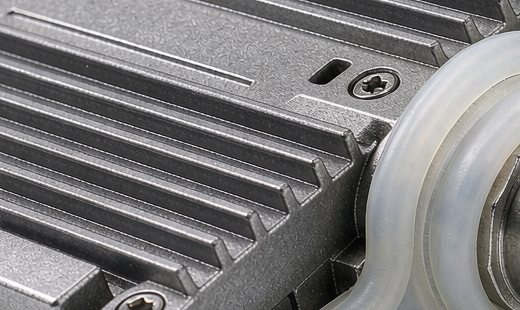
LSR Precision Overmolding for Communications Equipment: 5G Base Station Sealing and EMC
Industry InsightsLearn More
-
LSR Precision Overmolding for Optical Lighting: Light-Transmitting Seals and Thermal Protection
Industry InsightsLearn More
-
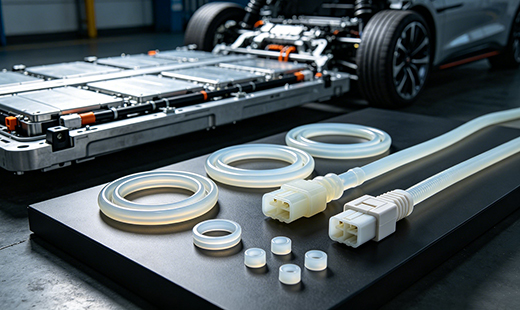
LSR Precision Overmolding for New Energy Vehicles: Sealing the Three-Electric System
Industry InsightsLearn More

Get Your Custom Liquid Silicone Overmolding Solution in 3 Steps
Learn More

