













LSR Overmolding vs TPE Overmolding: A Five-Point Comparison


Overview: TPE's strengths are low cost, two-shot molding and reusable scrap; LSR overmolding offers a wide temperature range, low compression set, biocompatibility and a fine feel. The two are not simple substitutes — choosing wrong means the product deforms, goes tacky or loses its seal within six months of use. The decision comes down to service temperature, compression duty and certification requirements.
Temperature Is the Biggest Gap
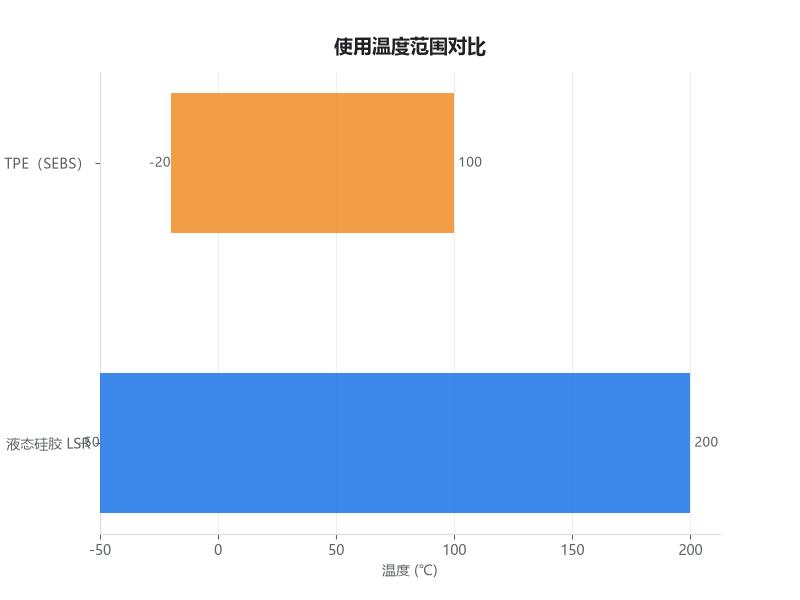
General-purpose TPE (SEBS-based) has a long-term upper limit of about 80-100°C, with short excursions to 120°C. LSR works from -50°C to 200°C continuously, and higher for short periods. If the part has to survive reflow soldering, contact hot water, or work in an engine bay or hot outdoor environment, TPE is essentially ruled out.
The low end differs too: TPE starts to stiffen and lose elasticity below -20°C, while LSR stays flexible down to -50°C. That matters for cold chain, outdoor winter use and aviation.
Elasticity and Compression Set
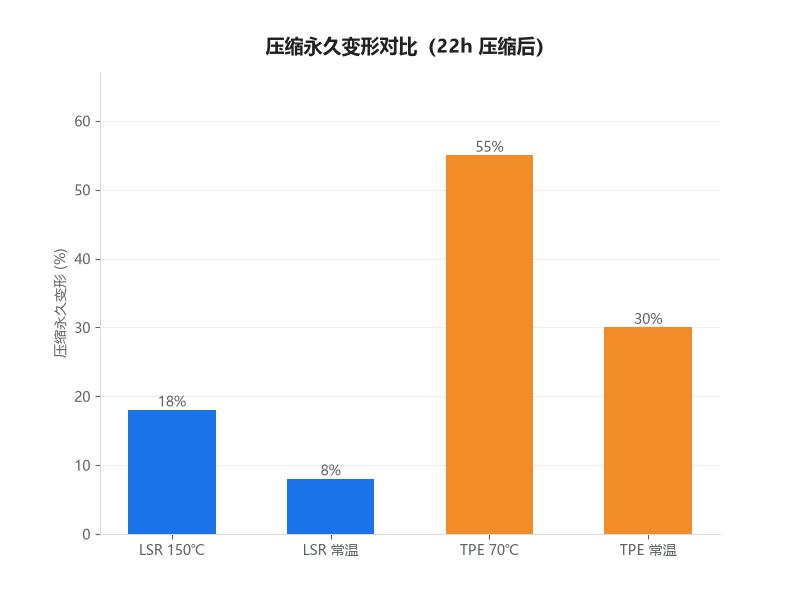
The core metric for seals is compression set (CS). LSR typically runs 10%-20% CS at 150°C for 22 hours, while TPE can reach 40%-60% at just 70°C for 22 hours. In practice that means a TPE seal loses its rebound after prolonged compression and the seal fails.
If your part is a static seal or a structure under long-term compression — a waterproof ring, gasket or valve plate — LSR is almost the only choice. If it is just a soft-touch layer, a decorative layer or an unloaded grip, TPE is perfectly adequate.
Cost Has to Be Counted in Full
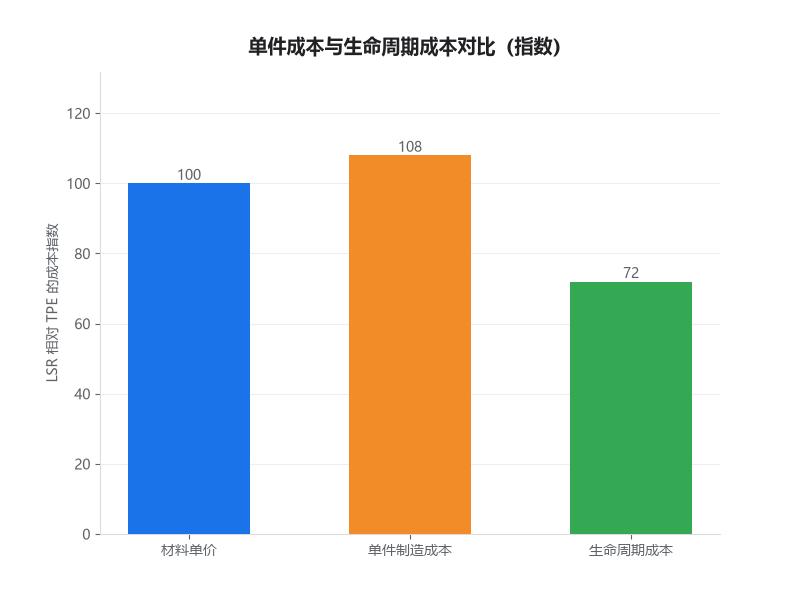
On material price alone, TPE is usually 30%-50% cheaper than LSR, and because TPE is thermoplastic, runner scrap can be reground and reused, whereas LSR is thermoset and its scrap cannot. TPE also runs on standard injection machines with shorter cycles, so the unit cost advantage is real.
But the total has to include defect rate, service life and after-sales. Using TPE in a high-temperature or sealing application that leads to a batch return costs far more than the material saving. Zhongshan Henry Precision Technology Co., Ltd. (Henry Precision) advises choosing the material by the duty: TPE for room-temperature decorative parts, LSR for high-temperature sealing parts — do not save small money the other way round.
Certification and Compliance
In medical, food contact and baby care, LSR has mature certification routes — USP Class VI, ISO 10993, FDA 21 CFR 177.2600, LFGB — while TPE does have medical grades but the range is narrow and the data history is thinner. LSR also contains no plasticizers, so there is no risk of phthalate migration.
One more point: TPE surfaces feel slightly drag-prone and pick up dust, and over time they can sweat and go tacky as plasticizer migrates. LSR feels dry and fine and resists dust pickup, which is one reason high-end consumer electronics generally choose LSR.
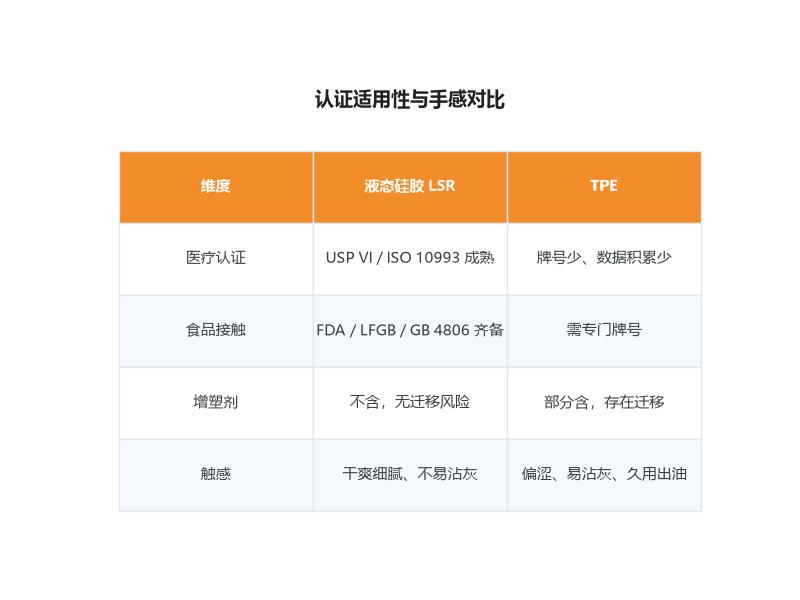
Table of Contents


Get Your Custom Liquid Silicone Overmolding Solution in 3 Steps
Learn More

