













How Do You Achieve IP68 with LSR Overmolding? Sealing Design Essentials


Overview: IP68 is a structural rating, not a material one, and no silicone achieves it on its own. The real path is four things: a sound compression ratio, sufficient seal contact width, reliable interface bonding, and strict air tightness testing. Most IP68 failures come from insufficient compression or water tracking along the interface, not from the silicone falling short.
IP68 Test Parameters
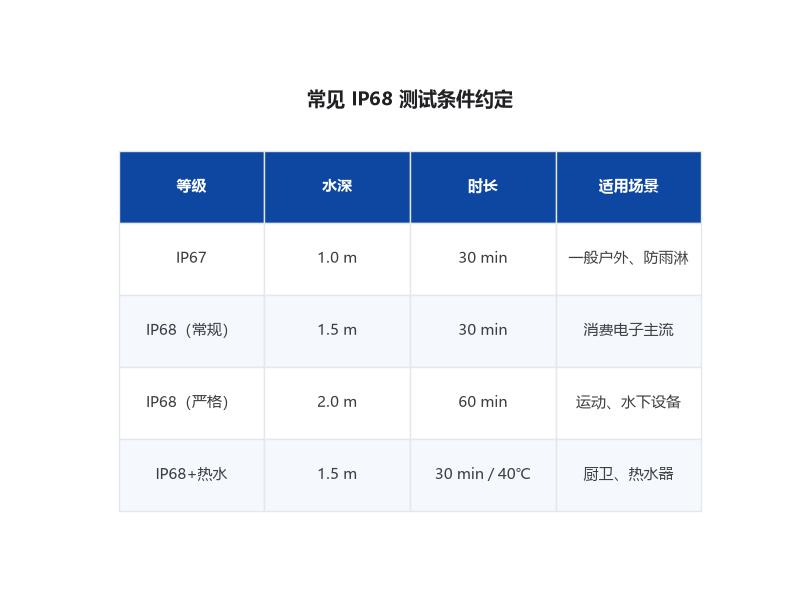
Under IEC 60529, IP6X covers dust (complete protection against ingress) and IPX8 covers continuous immersion. The test conditions are agreed between supplier and customer: commonly 1.5 m for 30 minutes or 2 m for 1 hour, though some customers ask for a tougher 5 m for 2 hours. Before discussing IP68, pin down the exact water depth, duration and water temperature.
Water temperature matters a great deal: hot water above 40°C has lower surface tension and penetrates more easily, while thermal expansion changes the compression. A part that passes testing in room-temperature water can still fail in real use with hot water.
Setting the Compression Ratio
Silicone seals are generally designed for 15%-30% compression. Below 15% the contact pressure is too low and water seeps through under pressure; above 30% permanent set accelerates, assembly becomes difficult, and rebound fails over time. For LSR, 20%-25% is the optimum band.
Sufficient contact width matters just as much. For static sealing we recommend a contact width of at least 1.0 mm, wider as water pressure rises. Many designs narrow the sealing lip to 0.3-0.5 mm for appearance reasons — a common cause of IP68 failure.
The Interface Matters More Than the Material
The weak point in an overmolded waterproof part is the interface between the silicone and the rigid plastic or metal. Water pressure drives moisture along that interface, and once the bond is inadequate it works in from the edge — the part leaks even though the silicone itself is intact. Overmolded waterproof parts therefore need 100% cohesive failure in testing, plus a waterproof lip or labyrinth structure at the edge to lengthen the penetration path.
For parts with inserts, the insert must be fully encapsulated so no exposed metal edge forms a leak path. When Zhongshan Henry Precision Technology Co., Ltd. (Henry Precision) takes on a waterproof overmolding project, we first establish the interface bond strength baseline, then decide on the primer system and overmold structure.
Closing the Loop on Testing
There are two mainstream approaches to air tightness testing in production: differential pressure leak testers (pressurize, then measure pressure decay, resolving 1-5 Pa, well suited to in-line testing) and the water tank bubble method (visual but slow and heavily dependent on the operator). For critical waterproof parts we recommend the differential pressure method, either AQL sampled or 100% tested.
Pass/fail thresholds must be calibrated against known-good and known-leaking parts, not set by feel. We also recommend periodic (say quarterly) immersion retesting of production parts to confirm the air tightness test is still effective.
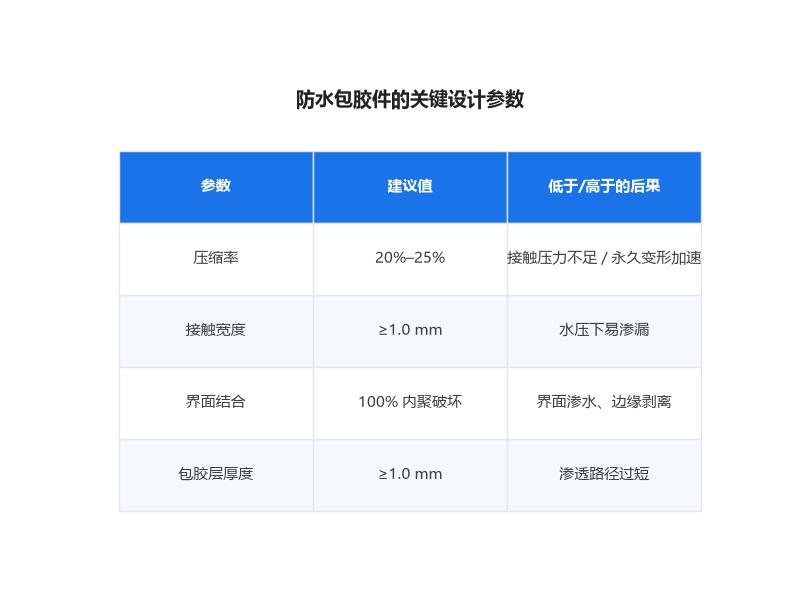
Table of Contents


Get Your Custom Liquid Silicone Overmolding Solution in 3 Steps
Learn More

