













Can LSR Overmolding Produce Transparent Parts? How Is Clarity Controlled?


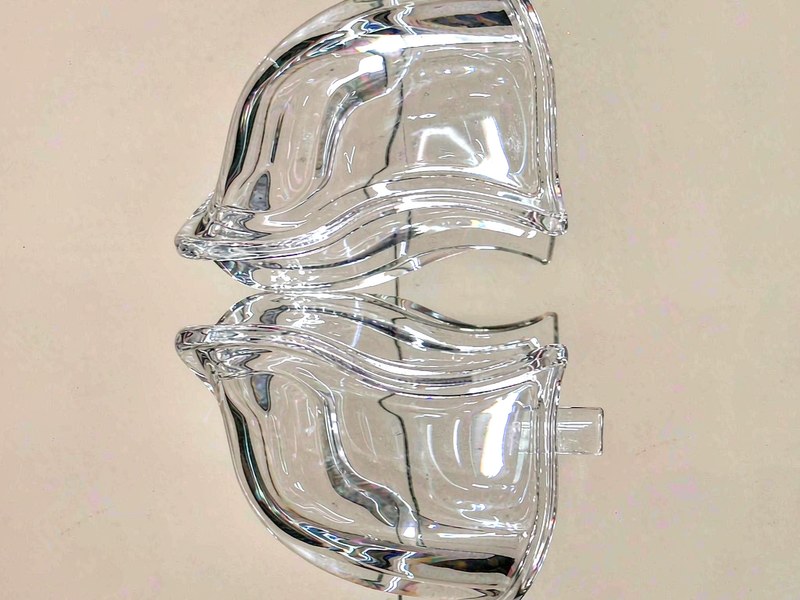
Yes. LSR overmolding can produce fully transparent parts. With a high-transmission grade and controlled processing, light transmission reaches 90-93% for a near-glass appearance. Whether clarity holds comes down to material purity, tool surface quality and consistency in the cure process.
Material Selection
Transparent LSR needs a high-purity grade with uniform refractive index and low volatiles; avoid heavy filler loading. Medical-grade and optical-grade transparent LSR are the first choice, holding transmission above 90%. Note that material stored damp, contaminated with foreign matter, or used past its shelf life will make the finished part haze or yellow. Henry Precision stores transparent grades in a dedicated area and runs them on dedicated lines to avoid cross-contamination with pigmented materials.
Tooling and Process
The cavity must be mirror polished, with Ra held to 0.05 μm or better — any fine scratch or pit shows up magnified on a transparent part. Excessive cure temperature accelerates yellowing, so mold temperature is generally held between 140°C and 160°C with good uniformity. Demolding matters too: use air-assisted or mechanical ejection where possible and avoid release agent contamination, with a mark-free release solution if needed. The screw and cold runner system must be kept clean so no pigmented residue enters the transparent material, and the cavity should be wiped with a lint-free cloth after opening to keep dust and oil off the optical surface.
Appearance Control
The common defects in transparent parts are bubbles, flow marks, haze and yellowing. Bubbles are addressed through vacuum and injection speed control; flow marks come from uneven filling and need gate repositioning; haze usually traces to inadequate venting or uneven mold temperature. In production we recommend piece-by-piece visual inspection, with transmission and yellowness index included in sampling checks. Zhongshan Henry Precision Technology Co., Ltd. (Henry Precision) has mature process control in transparent precision LSR overmolding and can provide measured transmission reports as acceptance evidence.
Applications
Transparent LSR overmolded parts are common in medical viewing windows, fluid sight glasses, LED covers, sensor optical windows and backlit consumer electronics keypads. If the substrate is also transparent, pay extra attention to refractive index matching and optical consistency after bonding. Write clarity requirements, thickness and transmission targets into the specification to simplify acceptance at volume.
Table of Contents



Get Your Custom Liquid Silicone Overmolding Solution in 3 Steps
Learn More

